If you've ever rummaged through a toolbox for a screw that doesn't slip loose mid-job-whether assembling a backyard deck, mounting a commercial HVAC unit, or securing a medical device housing-you've probably crossed paths with two workhorses of fasteners: captive screws and regular screws. As a supplier of industrial and specialty fasteners, I hear this question constantly, and the confusion makes sense: at a glance, both look like simple threaded metal shafts. But their design, function, and real-world use cases are night and day. Let's break down the differences, why they matter, and when you'd reach for one over the other.
First, let's start with the basics of what a "regular screw" is-because that's where a lot of the comparison gets tangled. A regular screw (sometimes called a machine screw or general-purpose screw) is a standalone threaded fastener designed to fasten two or more components by passing through a hole in one part and threading into a matching tapped hole in another. Its core feature is that it's not permanently attached to either part it connects; once it's removed, it can come free entirely, which is great for most general repairs or temporary assemblies. Think of the wood screws you use to hang a bookshelf, or the machine screws that hold a desktop computer's power supply in place: unscrew them, and they're easy to drop, lose, or fumble with when hands are full.
Now, a captive screw-short for "captive fastener"-is purpose-built to solve that exact problem: it stays with the component it's installed in, never fully detaching, even when fully loosened. The magic is in its threaded design: unlike a regular screw, which threads into both a host component and a secondary part, a captive screw has a locking mechanism that anchors it to the primary piece, so rotating the screw only adjusts its engagement with the secondary part. Remove the secondary part, and the captive screw stays put on the host-no lost parts, no scrambling to grab a spare mid-assembly.
The design specifics are where the two diverge most sharply. A regular screw typically has a standard shank, a distinct head (pan, hex, flat, etc.), and a uniform thread pattern along most of its length. For example, if you're using a regular pan-head self-drilling screw to fasten metal roofing, it drills its own hole, cuts threads as it goes, and ends up fully embedded in the secondary structural member-once removed, it pulls right out, no attachment left behind. That's not a flaw; that's how regular screws are meant to work for tasks like temporary construction, furniture assembly, or projects where you might reuse the screw later.
Captive screws, though, have a modified shank and a locking feature to prevent full withdrawal. There are a few common types, but two of the most widespread are the floating captive screw (with a nylon or metal locking collar that sits between the screw's head and the host component, stopping the screw from pulling all the way out) and the threaded captive screw (where the shank's lower threads lock into a tapped hole in the host, so only the upper threads engage the secondary part). This design makes non-negotiable sense for high-vibration environments-think aircraft cabins, factory machinery, or medical equipment that can't afford a loose screw mid-operation. A loose screw in a jet's avionics bay could lead to catastrophic failure, while a lost screw on a factory conveyor could halt production for hours.
Let's put this into a real-world example to make it concrete. Last year, a client in the agricultural equipment space reached out because their tractor's cab was experiencing recurring screw loss during harvest season-years of bumping over rough fields were shaking loose the regular screws holding the window panels, costing them downtime and replacement parts. We recommended captive screws for the cab frame, paired with regular screws only for removable interior panels that still needed easy access. The switch cut their screw loss by 90% in the first quarter, they told us. That's the practical value of the difference: it's not just a design tweak, it's a solution to a specific problem.
Another key difference is their compatibility with assembly processes. Regular screws are designed for universal use-you can grab a pan-head self-drilling screw, drive it through metal or wood, and it works as intended with standard power tools or manual drivers. They come in hundreds of sizes, materials, and finishes, from carbon steel to stainless steel, and are used in everything from DIY projects to large-scale construction. In our inventory, for instance, we stock a wide range of fasteners suited for both commercial and residential projects, including specialized options like alloy steel cup point set screws for holding pulleys and shafts in place, and slotted hex socket set screws with flat points for securing small, precise components in electronics and machinery.
Captive screws, by contrast, are custom or semi-custom for their application. They're engineered to fit a specific host component's tapped hole and vibration profile, so they don't have the same universal availability as regular screws. That's not a downside-it's a feature. Because their whole purpose is to stay put, they don't need to be interchangeable across multiple parts. For high-stakes industries, this tailored design is critical: a captive screw for a rocket's satellite mount isn't the same as one used in a hospital's MRI machine, and neither is a match for a regular screw used to hang a ceiling fan.
Wait, but what about when people mix these up? I've seen it happen more times than I can count: a maintenance worker grabs a regular screw to replace a captive one in a piece of equipment, only to have the screw fall out and get lost before they finish. Or a contractor uses a captive screw in a temporary deck installation, only to spend extra time unscrewing it later and risking damage to the wood. The line between the two is simple to remember: if the fastener needs to stay with the part it's attached to when removed, it's a captive screw; if it needs to be able to come entirely loose and be reused elsewhere, it's a regular screw.
Let's also address a common misconception: captive screws are always more expensive than regular screws. That's true for high-volume, custom engineered captive screws, but for standard applications, the price difference is negligible-and the savings in downtime, lost parts, and safety far outweigh the small premium. For small businesses or DIYers, regular screws are the obvious choice for low-stakes projects where loss is no big deal. For industries where uptime and safety are non-negotiable, captive screws are a cost-effective investment.
As a supplier, we work with clients across every sector, and part of my job is matching the right fastener to the right job. If you're working on a project that involves high vibration, hard-to-reach locations, or components that can't tolerate lost parts, captive screws are the way to go. If it's a temporary assembly, a DIY project, or something that requires removing and reusing the fastener regularly, a regular screw is the better pick.


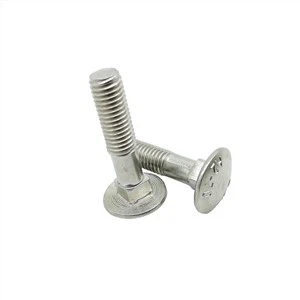
Of course, this isn't an exhaustive list-there are dozens of specialty screw types, from wafer head drilling screws for thin metal applications to stainless steel square neck carriage bolts for securing heavy wooden rails, and each has its own unique purpose. That's why it's so important to understand the core differences between the foundational types like captive and regular screws, so you can make the right choice for your project the first time.
If you're not sure which fastener you need, or you're looking for reliable, high-quality screws and bolts for your commercial or industrial project, don't hesitate to reach out. We stock a full range of standard and specialty fasteners tailored to meet your exact specifications, and our team can help you navigate any questions about design, material, or application.