


Jiangyin Xianggu Hardware Products: a Leading Professional Hex Socket Head Screws Manufacturer in China
We have specialized in manufacturing various types of Hex Socket Head Screws for many years. By doing business with us, you can gain:
Complete Product Range
Our company can provide various stainless steel, carbon steel, copper Hex Bolts, Flange Bolts, Hex Socket Head Screws, Hex Nuts, Spring Washers, Flat Washers and other fasteners. We also offer a variety of coating treatments, such as hot-dip galvanizing, Dacromet, blue-white zinc, yellow zinc.
Professional Management System
Our company is committed to integrating the advantageous supply chain system of various fastener products, focusing on the sales staff's mastery of professional knowledge of fasteners, and aims to provide customers with fastener system solutions.
Rich Experience
We have been working with customers from various countries and industries for many years, so the experience is very rich. We are willing to be your partner with first-class product quality, first-class service level and competitive price.
Wide Range of Product Applications
Our fasteners are widely used in automobiles, ships, wind energy, solar energy, boilers, electronic appliances, mechanical equipment, construction engineering and other fields.
-
![Stainless Steel Hex Head Screws]() Stainless Steel Hex Head ScrewsStainless steel hex head screws are commonly used fasteners in various industries. They are highly preferred for their durability, strength and ability to withstand extreme temperatures.
Stainless Steel Hex Head ScrewsStainless steel hex head screws are commonly used fasteners in various industries. They are highly preferred for their durability, strength and ability to withstand extreme temperatures. -
![Stainless Steel Hex Socket Head Hex Screw]() Stainless Steel Hex Socket Head Hex ScrewStainless steel hex socket head hex Screw is an essential fastener used in a wide variety of applications such as industrial machinery, construction, automotive, and electronics.
Stainless Steel Hex Socket Head Hex ScrewStainless steel hex socket head hex Screw is an essential fastener used in a wide variety of applications such as industrial machinery, construction, automotive, and electronics. -
![Hexalobular Socket Head Cap Screws]() Hexalobular Socket Head Cap ScrewsTorx-Plus drives have more contact points than hex drives, allowing you to reduce slippage or damage to the grooves when tightening these screws.
Hexalobular Socket Head Cap ScrewsTorx-Plus drives have more contact points than hex drives, allowing you to reduce slippage or damage to the grooves when tightening these screws. -
![Hexagon Socket Button Head Screws]() Hexagon Socket Button Head ScrewsMetric hexagon socket button screws made from grade 10.9 heat treated steel
Hexagon Socket Button Head ScrewsMetric hexagon socket button screws made from grade 10.9 heat treated steel -
![Hexagon Socket Countersunk Head Cap Screws]() Hexagon Socket Countersunk Head Cap ScrewsMetric Alloy Steel High Strength Hex Drive Flat Socket Cap Head Screws
Hexagon Socket Countersunk Head Cap ScrewsMetric Alloy Steel High Strength Hex Drive Flat Socket Cap Head Screws -
![Black Oxide Socket Head Screws]() Black Oxide Socket Head ScrewsAlloy Steel Grade 12.9 Black Oxide Socket Head Screws
Black Oxide Socket Head ScrewsAlloy Steel Grade 12.9 Black Oxide Socket Head Screws -
![Stainless Steel Hex Socket Screw Allen Bolts]() Stainless Steel Hex Socket Screw Allen BoltsDIN912,Stainless steel 316,M1.4 to M100
Stainless Steel Hex Socket Screw Allen BoltsDIN912,Stainless steel 316,M1.4 to M100 -
![Metric Alloy Steel Hex Socket Head Shoulder Screws]() Metric Alloy Steel Hex Socket Head Shoulder ScrewsCompared to grade 12.9 steel, these alloy steel shoulder screws are the strongest screws we offer.
Metric Alloy Steel Hex Socket Head Shoulder ScrewsCompared to grade 12.9 steel, these alloy steel shoulder screws are the strongest screws we offer. -
![316 Stainless Steel Socket Head Screws]() 316 Stainless Steel Socket Head ScrewsMade from 316 stainless steel, these screws have excellent chemical resistance and may be mildly magnetic. Length is measured from under the head.
316 Stainless Steel Socket Head ScrewsMade from 316 stainless steel, these screws have excellent chemical resistance and may be mildly magnetic. Length is measured from under the head. -
![Hex Socket Head Cap Screws]() Hex Socket Head Cap ScrewsStainless Steel 304 Socket Head Screws. Made from 304 stainless steel, these screws have good chemical resistance and may be mildly magnetic. Length is measured from under the head.
Hex Socket Head Cap ScrewsStainless Steel 304 Socket Head Screws. Made from 304 stainless steel, these screws have good chemical resistance and may be mildly magnetic. Length is measured from under the head. -
![Alloy Steel Hex Socket Head Screws]() Alloy Steel Hex Socket Head ScrewsBlack-oxide steel screws are mildly corrosion resistant in dry environments. Zinc-plated steel screws resist corrosion in wet environments. The screws with a blue-dyed finish are easy to distinguish.
Alloy Steel Hex Socket Head ScrewsBlack-oxide steel screws are mildly corrosion resistant in dry environments. Zinc-plated steel screws resist corrosion in wet environments. The screws with a blue-dyed finish are easy to distinguish. -
![Hexagon Socket Countersunk Head Screws]() Hexagon Socket Countersunk Head ScrewsMore corrosion resistant than 304 stainless steel screws, these screws have excellent resistance to chemicals and salt water.. They may be mildly magnetic.. They’re angled under the head to sit flush
Hexagon Socket Countersunk Head ScrewsMore corrosion resistant than 304 stainless steel screws, these screws have excellent resistance to chemicals and salt water.. They may be mildly magnetic.. They’re angled under the head to sit flush


Hex socket head screws are widely used in industrial production and assembly lines, including the automotive industry, furniture manufacturing, machine tool applications and steel manufacturing. Like the vast majority of socket head cap screws, socket head cap screws have a cylindrical head with an Allen drive hole and are usually threaded along the entire length of the shaft. Again, they are primarily designed for use on components that do not have enough clearance to install traditional nuts and bolts or to operate a standard socket wrench.
Key Features of Hex Socket Head Screws

Long Service Life
Since these hex socket head screws are made of stainless steel, steel, aluminum and other metal materials, they have good corrosion resistance, heat resistance and pressure resistance. Whether working in complex machining and repair environments or demanding medical applications, these screws ensure stability and durability.

Strong Reliability
Hex socket head screws are less likely to come off than traditional hex cap screws. When installing or removing conventional screws, the screw heads may become dislodged. When the drill bit is placed in the drive groove of the head, it is possible to damage the screw during installation or removal. However, socket head screws distribute this rotational force on all six sides, making delamination less likely to occur.

Easy to Use
You can use a ratchet and socket combination, also known as a socket wrench, to remove or install these hex socket head screws. You can easily install the socket bit on the head of the hex screw. Once positioned, you simply turn the socket wrench to install or remove the hex head screws. A socket wrench will clamp all six sides of the head, allowing for more torque.

Wide Range of Applications
Hex head screws have a hexagonal shape that provides more torque than traditional round head screws. They also have a narrow head, making them ideal for use in hard-to-reach areas such as machine repair and maintenance and many other areas. They offer flexibility and convenience unmatched by other fasteners.
Hex Socket Head Screws are generally made using steel or stainless steel, although other materials like carbon and alloy steel are also used as well. Following are the various advantages these bolts possess and why they are internationally acclaimed for their use in various tools, machines and other accessories.
Easier to Produce
Hexagonal Socket Screws are mostly preferred over other similar types of screws for one major reason. They are extremely easy to produce. Its simple production process can be attributed to its simple design. Moreover, they are also easy to use because of this very reason. All you need to install such screws is a strong socket wrench. They can be embedded into a wide variety of tools and machinery equipment effortlessly.
Displays Considerable Strength
A Allen bolt consists of six stress tolerating surfaces, which makes it more than capable of withstanding heavy screwing than other types of screws like the slotted or cross-shaped ones that only harbor two stress-bearing surfaces. Suffice to say, these screws can withstand stronger force than most of their counterparts.
Smooth Surface Finish
Screws are important to hold certain equipment or tool together. However, they can even result in an uneven, rough surface as they usually do not sink entirely into place. This is not the case with hex bolts. Stainless steel Allen screws, for instance, will sink entirely into their assigned space. As a result, the surface of a workpiece with such screws on them is smooth and bereft of any unattractive bumps caused by a half popped-out screw.
Easy to Install
Aside from being very easy to produce, these screws are incredibly simple to install, especially for narrower assembly occasions. Hexagonal head screws are often the first choice of mechanics and engineers when it comes to maintenance, debugging, or assembly.
Hard to Disassemble
Allen Bolts, once installed, can be excruciating to remove. This is a great advantage if you don’t want unauthorized individuals meddling with your tools or machines. That doesn’t mean they are impossible to disassemble of course. With the right wrench or a special screwdriver, one can proceed to disassemble them just as easily as they were installed in the first place.
Common Materials for Hex Socket Head Screws
There are many different materials used in the manufacture of hex socket head screws. The most common materials are steel and stainless steel, but alternatives include brass, aluminum, black nickel, zinc-plated and chrome-plated socket head screws. Choosing the ideal material depends on the specific application.
Stainless Steel Hex Socket Head Screws
Stainless steel is the most common material for socket head screws. This kind of screws are widely used in various precision machinery industries, classification instruments, meters, electronic products, household appliances, communication products, locks, lamps, lighting, toys, etc. Stainless steel not only looks great, it also offers excellent corrosion resistance. High heat resistance is also a great benefit, as due to the way stainless steel is made, it can withstand an incredible amount of heat compared to screws or sockets made of standard steel. This reliable and durable material not only ensures a long service life but also increases sustainability.
Aluminium Hex Socket Head Screws
For applications where weight is a key consideration, aluminum socket head screws are often preferred. This may include uses ranging from the automotive industry to installing hardware and trim on movable furniture, cabinets, doors and windows. Although aluminum is only about one-third the weight of steel, it is durable and tends to have lower shear strength. While aluminum has good corrosion resistance in more challenging environments, it is not as wear-resistant as stainless steel.
Zinc or Nickel Plated Steel Socket Screws
The main reason to use zinc or nickel plating is for superior corrosion (rust) resistance, and this simple manufacturing process can provide all types of screws. Combination zinc-nickel plating is generally considered a tougher coating (up to twice as hard) compared to standard zinc plating, and it offers four times the corrosion resistance of other metal coating processes. However, it is generally more expensive and may not be considered a cost-effective option in many applications where standard galvanized steel socket head screws are sufficient.
Brass Hex Socket Head Screws
Brass socket head screws are generally favored for their aesthetic value, but as an alloy of copper and zinc, brass or brass-head socket screws may offer additional advantages in certain situations. Brass is stronger than copper alone, although it is still much less rigid than most steel or stainless steel Allen screws. However, it's also worth noting that brass plating has lower corrosion resistance than solid brass socket head screws. If the product will be used in exposed locations or outdoor applications, solid brass socket head screws are a better choice.
Types of Hex Socket Head Screws
There are several socket head types to choose from.
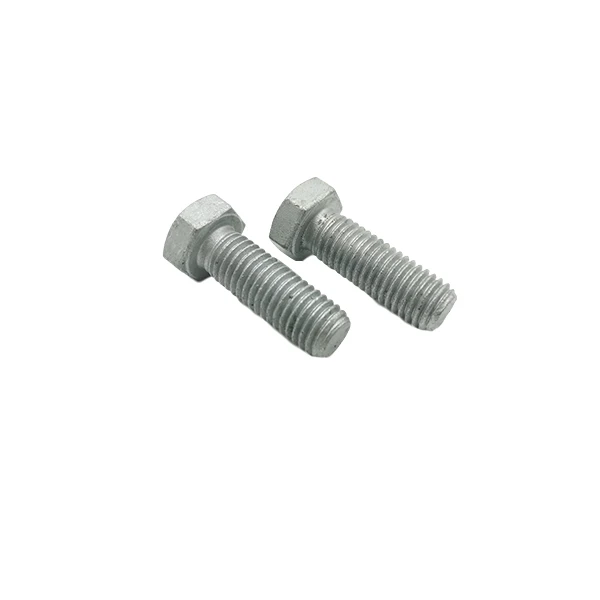
Hex Socket Head Cap Screws – Standard
Button Head Socket Cap Screws
Countersunk Socket Screws
Hex-Socket Set Screws
Hex-Socket Shoulder Screws
Hex Socket Head Screws Dimensions
Dimensions are critical to the functionality and compatibility of the corresponding hex head screw assembly. Hex socket head screw sizes are typically defined by the following elements:
Thread Size: This is the diameter of the shank of the screw. Allen screw dimensions reflect this dimension. For example, you can get metric M3, M4, M5, and M6 socket head screws, among others. Examples of imperial sizes include #6-32, #8-32, and #10-24.
Length: This is the distance from the underside of the screw head to the end of the threaded portion. Note: This is true whether we are talking about machine screws, Allen screws, long Allen screws, or even extra long Allen screws used as wall Allen screws.
Head Diameter: the diameter of the screw head.
Head Height: This is the distance from the top of the head to the bottom of the socket.
Sleeve Depth: This is the depth of the sleeve inside the head of the screw.
Applications of Hex Socket Head Screws
Here are a few popular hex socket head screw applications:

Mechanical
Hex head screws are a common choice for fastening and disassembly in mechanical projects and equipment assembly.

Construction
Hex screws are used in masonry and construction projects, especially those using steel and wood.

Tight Spaces
Hex head screws have six access points, making them easier to install, tighten, or remove in tight spaces or spaces with only one side of clearance.

Dirty Applications
Hex screws with solid heads rather than recessed or recessed hex screws are ideal for dirty applications where debris and buildup can threaten the integrity of the screw over time. Since there are no openings to fill, clogging won't occur, and if appearance or hygiene is important, they're easy to wipe down and maintain their shine.
Hex Cap Screws vs. Hex Socket Head Screws: Understanding the Differences
Hex cap screws and hex socket head socket screws are two common types of fasteners that serve various purposes in the world of manufacturing, construction, solar installation, automotive and more. Let's summarize the key differences between the two:
Hex cap screws have a large, flat hexagonal head, while hex socket head socket screws have a cylindrical head with a hexagonal socket.
Hex cap screws require a wrench for installation, whereas hex socket head socket screws require an Allen wrench or hex key.
Hex cap screws typically have full threads, while hex socket head socket screws often feature partial threads.
Hex cap screws excel in heavy-duty and structural applications, while hex socket head socket screws are favored in applications requiring a low-profile design or access to tight spaces.
How to Choose Hex Socket Head Screws
Are you looking to buy hex socket head screws? With their hexagonal drive recess, they offer a convenient alternative to traditional Philips head fasteners. You can install and remove socket cap screws using a hex key. Hex socket head screws are ideal for small spaces in which you can’t fit a screwdriver. While all socket cap screws have a hexagonal drive recess, they are available in different types. If you’re planning to buy them, you’ll need to choose the right type of socket cap screws.
Material
You should consider the material when choosing hex socket head screws. They are available in many of the same materials as traditional fasteners. Some of them are made of stainless. Other socket cap screws are made of alloy. Make sure the material is strong, durable and resistant to rust and corrosion.
Length
Hex socket head screws are available in different lengths as well. You’ll need to choose a length that’s appropriate for the application for which you intend to use the socket cap screws. If you’re going to use the socket cap screws to hold two or more parts together, they must be long enough to fit through those parts. Socket cap screws are available in metric and inch-based sizes. Regardless, you should choose socket cap screws in a length that matches the application for which you intend to use them.
Partially Threaded vs Fully Threaded
The shank of a hex socket head screw may be partially threaded or fully threaded. The shank is the long cylindrical body of a fastener. All screws and bolts have a shank and a head. The shank is the body, whereas the head is the top to which the body connects. There are socket cap screws with a partially threaded shank, and there are socket cap screws with a fully threaded shank.
Coarse vs Fine Thread
Something else to consider when choosing hex socket head screws is whether the thread is coarse or fine. Coarse thread is characterized by fewer threads per distance. Fine thread is characterized by more threads per distance. In other words, fine-thread socket cap screws have more, thinner threads than coarse-thread socket cap screws.
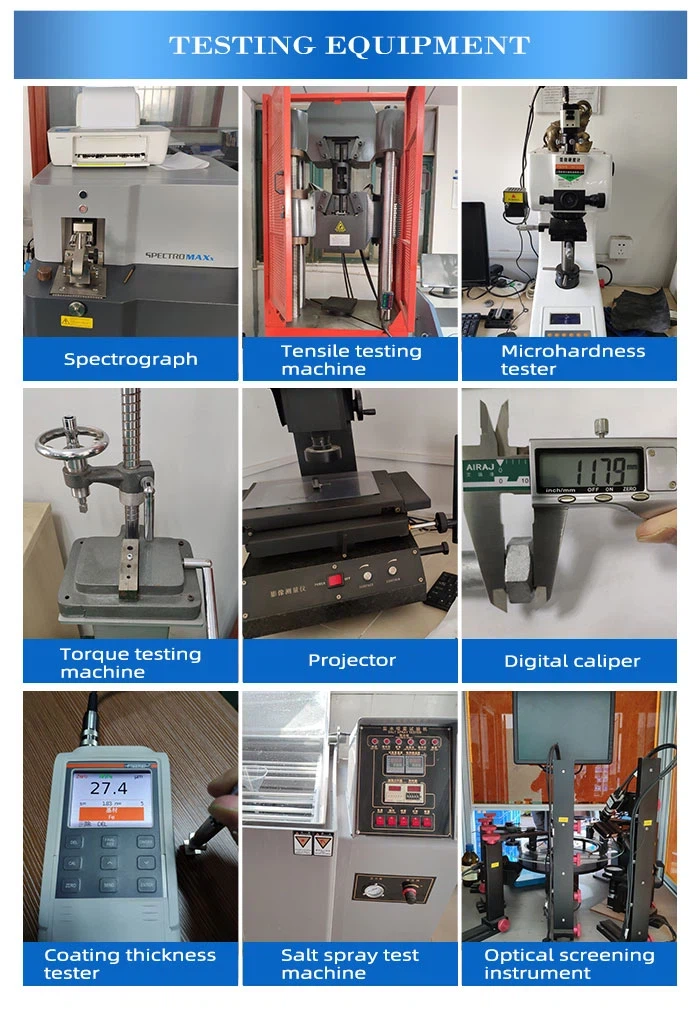
Testing Equipment
We use the following equipment to test our products to ensure they meet high quality standards:
Factory Photos
The picture below is our production workshop:

Ultimate Guide
Q: What is a socket screw?
Q: What are screws with hex heads called?
Q: What are the advantages of using a hexagonal socket head cap screw?
Q: What is the difference between hex head screws and socket head screws?
Q: What is the difference between hex bolts and hex screws?
Q: Are hex socket head screws strong?
Q: What Is the strongest fastener?
Q: Are hex head screws fully threaded?
Q: Are M10 and 10mm the same?
Q: Why use a socket head screw?
Q: What grade is a socket head screw?
Q: Are hexagon socket screws bolts?
Q: Are all hex socket head screws grade 8?
Q: Which one is stronger, Grade 8.8 or Grade 5?
Q: Regarding hexagon socket screws, are class 8.8 the same as grade 8?
Q: How strong are hex socket head screws?
Q: Is there a difference between 304 and 316 stainless steel hex socket head screws?
Q: What is a socket head cap screw?
Q: What is a socket screw?
Q: What exactly is the point of a socket screw, and when should you use one?
Q: What are tamper-resistant socket cap screws?
Q: How tamper-resistant socket cap screws differ from traditional socket cap screws?
As one of the most professional hex socket head screws manufacturers and suppliers in China, we're featured by customized hardware products made in China. Please rest assured to buy or wholesale high quality hex socket head screws for sale here from our factory. For price consultation, contact us.
1 4 28 stainless steel button head cap screws, packaging hex socket head screws, specification of hex socket head screwsPopular Products


