


Jiangyin Xianggu Hardware Products: A Leading Professional Flange Nuts Manufacturer in China
We have specialized in manufacturing various types of Hex Bolts for many years. By doing business with us, you can gain:
Complete Product Range
Our company can provide various stainless steel, carbon steel, copper Hex Bolts, Flange Bolts, Hex Socket Head Screws, Hex Nuts, Spring Washers, Flat Washers and other fasteners. We also offer a variety of coating treatments, such as hot-dip galvanizing, Dacromet, blue-white zinc, yellow zinc.
Professional Management System
Our company is committed to integrating the advantageous supply chain system of various fastener products, focusing on the sales staff's mastery of professional knowledge of fasteners, and aims to provide customers with fastener system solutions.
Rich Experience
We have been working with customers from various countries and industries for many years, so the experience is very rich. We are willing to be your partner with first-class product quality, first-class service level and competitive price.
Wide Range of Product Applications
Our fasteners are widely used in automobiles, ships, wind energy, solar energy, boilers, electronic appliances, mechanical equipment, construction engineering and other fields.
-
![Hexagon Serrated Flange Nut]() Hexagon Serrated Flange NutHexagon Serrated Flange Nut is an essential component in mechanical and construction projects. These nuts are designed with serrated flanges that grip materials and provide superior resistance to
Hexagon Serrated Flange NutHexagon Serrated Flange Nut is an essential component in mechanical and construction projects. These nuts are designed with serrated flanges that grip materials and provide superior resistance to -
![Stainless Steel Hex Flange Nut]() Stainless Steel Hex Flange NutStainless steel Hex Flange Nut is a common fastener used to join two or more parts. It is made of stainless steel and has excellent corrosion and wear resistance, making it suitable for a variety of
Stainless Steel Hex Flange NutStainless steel Hex Flange Nut is a common fastener used to join two or more parts. It is made of stainless steel and has excellent corrosion and wear resistance, making it suitable for a variety of -
![Flange Hex Lock Nuts]() Flange Hex Lock NutsFlange Hex Lock Nuts are important components in a variety of industrial applications. These nuts have a serrated flange that provides a locking action when the nut is tightened onto the bolt. This
Flange Hex Lock NutsFlange Hex Lock Nuts are important components in a variety of industrial applications. These nuts have a serrated flange that provides a locking action when the nut is tightened onto the bolt. This -
![Hexagon Flange Nut]() Hexagon Flange NutHexagon Flange Nut, also known as hexagon flange nut or flange hex nut, is a specialized fastener used to secure bolts or screws in a variety of applications.
Hexagon Flange NutHexagon Flange Nut, also known as hexagon flange nut or flange hex nut, is a specialized fastener used to secure bolts or screws in a variety of applications. -
![Hexagon Nuts With Flange]() Hexagon Nuts With FlangeHexagon Nuts With Flange are commonly used in machine assembly and mechanical applications. These nuts are designed with flanges that provide additional surface area to distribute pressure and reduce
Hexagon Nuts With FlangeHexagon Nuts With Flange are commonly used in machine assembly and mechanical applications. These nuts are designed with flanges that provide additional surface area to distribute pressure and reduce


What Is a Flange Nut?
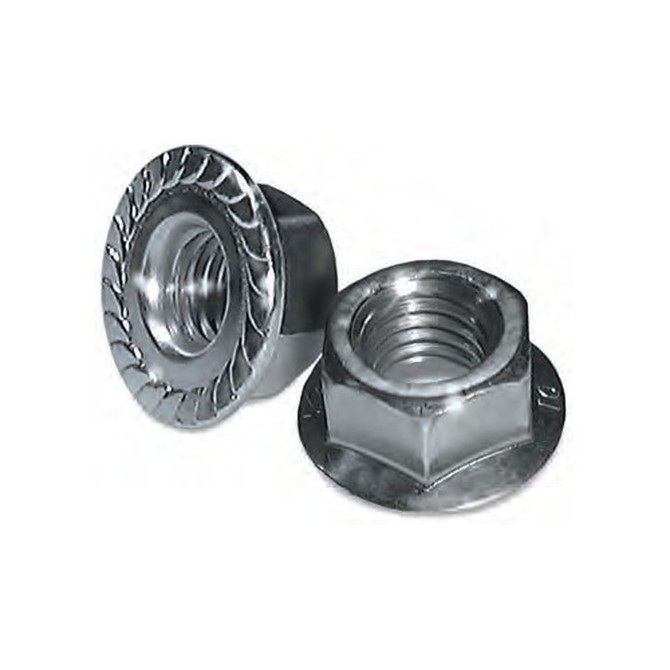
A flange nut is a type of nut that has a wide flange at one end that acts as an integrated washer. This flange serves to distribute the pressure of the nut over the part being secured, reducing the chance of damage to the part and making it less likely to loosen under vibration.
Advantages of Flange Nuts

Easy installation
Flange nuts are extremely easy to install as they don't require any additional fittings such as washers or lock washers. This can save a lot of time during the installation process.

Increased bearing surface
Flange nuts have a larger bearing surface than regular nuts. This provides additional support and distributes pressure to the surface of the object being tightened, which helps to prevent damage.

Better grip
The flanged design of these nuts allows for better grip, making them ideal for use on objects that require a high degree of torque or that are subject to vibration.

Reduced risk of loosening
Flange nuts have an increased resistance to loosening due to their self-locking mechanism, which helps to maintain a secure connection over time.

Versatility
Flange nuts can be used in a variety of applications, including automotive, construction, and industrial settings. They are an ideal solution for securing pipelines, building structures, and machinery.
Corrosion resistance
Flange nuts are often made from materials that are resistant to corrosion, which helps to prolong their lifespan and reduce maintenance cost.
What Are the Common Applications for Flange Nuts?
1. Automotive Industry: Flange nuts are widely used in the automotive industry to secure wheels, exhaust systems, and other automotive components.
2. Aerospace Industry: Flange nuts are used in the aerospace industry to secure components such as engine mounts, wing structures, and landing gear.
3. Construction Industry: Flange nuts are used in the construction industry to secure steel structures, bridges, and roadways.
4. Industrial Machinery: Flange nuts are used in machinery and equipment to secure components and fasten them firmly.
5. Oil and Gas Industry: Flange nuts are used in the oil and gas industry to secure pipelines, tanks, and other components.
6. Marine Industry: Flange nuts are used in the marine industry to secure ship components, anchor chains, and mooring systems.
7. Electrical Industry: Flange nuts are used in the electrical industry to secure electrical panels, transformers, and switchgear.
Production Steps of Flange Nuts

1. Raw Material Selection: The first step in the production of flange nuts is the selection of high-quality raw materials, usually metal alloys such as stainless steel, carbon steel, or brass. The raw materials must meet specific standards to ensure the durability and strength of the flange nuts.
2. Cold Heading: In this step, the selected raw materials are fed into a cold heading machine, which uses high pressure to form the basic shape of the nut. The cold heading process helps in creating the initial form of the flange nut with a head and body.
3. Thread Rolling: After cold heading, the next step is thread rolling, where threads are formed on the body of the flange nut. Thread rolling increases the strength and precision of the threads, ensuring a secure fit when fastening.
4. Flange Formation: Once the threads are rolled, a secondary operation is performed to create a flange on one end of the nut. The flange provides a larger surface area for better distribution of load and prevents loosening under vibration.
5. Heat Treatment: Heat treatment is essential to improve the mechanical properties of the flange nuts, such as hardness and toughness. The nuts are heated to a specific temperature and then cooled rapidly to achieve desired properties.
6. Surface Finishing: After heat treatment, surface finishing processes like polishing, plating, or coating are carried out to enhance corrosion resistance and appearance. This step also includes quality checks to ensure that each nut meets specified standards.
7. Inspection and Packaging: Finally, all finished flange nuts undergo rigorous quality inspection to check dimensions, threads, surface finish, and overall quality. Once approved, the nuts are packaged according to customer requirements for storage and transportation.
Features of Flange Nuts
Flange
The flange on the nut provides a larger bearing surface area, distributing the clamping load over a wider area. This improves the nut's resistance to loosening due to vibration or torque.
Self locking
Some flange nuts are designed with a self-locking feature, which helps to prevent loosening under extreme conditions.
Material
Flange nuts are typically made from steel, stainless steel, or other high-strength materials, making them suitable for heavy-duty applications.
Shape
Flange nuts are available in hexagonal and square shapes for easy installation and removal with standard tools.
Thread types
Flange nuts are available in various thread types, including coarse, fine, and Unified National Coarse (UNC) threads, allowing them to be used in different applications.
Application
Flange nuts are used in a variety of applications where they are subject to high stress or vibration, including aerospace, automotive, construction, and heavy machinery.
The Importance of Torqueing Flange Nuts Correctly
In the realm of mechanical engineering and construction, the assembly of various components using bolts and nuts is a common practice. Among these, flange nuts play a critical role in securing parts together, ensuring structural integrity and operational efficiency. The process of tightening these nuts to the correct torque, known as torqueing, is paramount for several reasons.
The correct torqueing of flange nuts is essential for ensuring safety. Over-tightening can lead to thread stripping or bolt failure under stress, while under-tightening might result in loose connections that could lead to parts disassembling unexpectedly. Such scenarios are hazardous not only to the machinery but also pose significant risks to operators and nearby personnel. Correctly torqued flange nuts maintain the desired tension between connected parts, preventing accidents caused by component failure.
The performance of an assembly significantly depends on how well its components are secured together. Flange connections are no exception. Proper torqueing ensures that there is an even distribution of pressure across the connection surface, which minimizes leaks in piping systems or power loss in mechanical systems. This uniform pressure distribution achieved by correct torque application ensures that the assembly performs as designed without unexpected downtimes or efficiency losses.
Another critical aspect influenced by the proper torqueing of flange nuts is the longevity of both the fasteners themselves and the components they secure. Incorrect torque can lead to premature wear and tear due to uneven stress distribution or constant vibration caused by loose connections. By applying the correct torque, one can ensure that all parts work harmoniously without undue stress on any component, thereby extending their operational life.
Achieving correct torque requires precision instruments such as torque wrenches that provide accurate measurements. The use of such tools ensures consistency in assembly practices across different operators and shifts. Moreover, adherence to industry standards for specific torques based on bolt size and material further enhances reliability across various applications.
Correctly torqueing flange nuts is not a trivial task but a critical procedure that impacts safety, performance, longevity, and standardization in mechanical assemblies. It requires knowledge of material properties, understanding of mechanical principles, and access to precise tools. As industries continue to evolve with more complex assemblies and higher performance demands, the importance of correctly applied torque cannot be overstated. Ensuring this practice is upheld is essential for maintaining high standards in engineering applications worldwide.
What Materials Are Flange Nuts Typically Made Of?
Carbon Steel
This is the most common material for flange nuts due to its strength and cost-effectiveness. Carbon steel flange nuts are suitable for a wide range of applications where corrosion is not a major concern.
Stainless Steel
Stainless steel flange nuts offer excellent corrosion resistance and are ideal for use in environments that are prone to rust or where there is exposure to moisture or chemicals. They are more expensive than carbon steel but provide superior durability in harsh conditions.
Alloy Steel
Alloy steel materials provide additional strength and wear resistance compared to carbon steel. They can be heat treated to various hardness levels depending on the application's requirements.
Brass
Brass flange nuts offer good corrosion resistance and electrical conductivity, making them suitable for electrical applications and use in corrosive environments where non-magnetic properties are required.
Aluminum
Aluminum flange nuts are lightweight and offer good corrosion resistance, making them ideal for aerospace, automotive, and marine applications where reducing weight is critical.
Titanium
Titanium flange nuts provide exceptional strength-to-weight ratios and excellent corrosion resistance. They are often used in high-performance applications such as motorsports, aerospace, and medical devices.
How Do You Tighten Flange Nuts?
1. Use the Right Tools: Before tightening flange nuts, make sure you have the appropriate tools for the job. Typically, a torque wrench is used to achieve the correct level of tightness.
2. Align the Flanges: Ensure that the flanges are properly aligned before tightening the nuts. Misaligned flanges can lead to uneven pressure distribution and potential leaks.
3. Hand-Tighten: Start by hand-tightening each nut onto its respective bolt. This helps prevent cross-threading and ensures that the nut is properly seated.
4. Use a Cross Pattern: When tightening multiple nuts on a flange, use a cross-pattern sequence. This means tightening opposite nuts in a crisscross pattern to ensure even pressure distribution.
5. Apply Proper Torque: Using a torque wrench, tighten each nut gradually and evenly in small increments. Refer to the manufacturer's specifications for the correct torque value.
6. Check Tightness: Once all nuts are tightened to the specified torque value, double-check each nut to ensure they are secure. Re-tighten any nuts if necessary.
7. Inspect for Leaks: After tightening the flange nuts, inspect the connection for any signs of leaks or gaps. Address any issues immediately to prevent further problems.
8. Documentation: It is important to document the tightening process, including torque values used and any observations made during inspection. This documentation can be useful for future maintenance or troubleshooting.
How to Choose Flange Nuts?
1. Material
Flange nuts are commonly made from materials such as stainless steel, carbon steel, and brass. The material you choose should be compatible with the application and environment in which the nuts will be used. For example, stainless steel is corrosion-resistant and ideal for outdoor or high-moisture environments.
2. Size
Flange nuts come in various sizes and thread pitches. It is crucial to select the right size that matches the bolt or stud with which it will be used. Using the wrong size can lead to improper fastening and potential safety hazards.
3. Flange Type
There are different types of flange nuts available, such as serrated flange nuts, non-serrated flange nuts, and prevailing torque flange nuts. Each type has its unique features and benefits, so choose the one that best suits your application requirements.
4. Load Capacity
Consider the load capacity requirements of your project when selecting flange nuts. Make sure that the nuts you choose can withstand the intended load without failing or coming loose.
5. Application
Think about where and how the flange nuts will be used. Different applications may require different types of flange nuts with specific characteristics, such as high temperature resistance or vibration resistance.
6. Quality
Always opt for high-quality flange nuts from reputable manufacturers to ensure reliability and durability. Poor-quality nuts may strip or break under stress, leading to safety risks and project delays.
How Are Flange Nuts Installed?
1. Choose the right nuts: Flange nuts come in different sizes and thread types. Choose the size and thread that matches the bolt you are using.
2. Thread the nut: Begin by threading the flange nut onto the bolt. The flange facing out away from the surface you are working on.
3. Apply force: Use a wrench or socket to tighten the nut. Apply enough force to attach the nut securely but not so much that it damages the threads on the bolt or nut.
4. Verify tightness: After tightening, check the tightness of the nut. You can use a torque wrench to ensure that the nut has been tightened to the correct torque specification.
5. Lock the nut: Some applications may require a locking mechanism to prevent the nut from coming loose over time. Use a lock washer or nylon locking insert to lock the nut in place if necessary.
Are There Specific Torque Requirements for Tightening Flange Nuts?
Yes, there are specific torque requirements for tightening flange nuts to ensure proper sealing and prevent leakage in industrial applications. When tightening flange nuts, it is important to follow the manufacturer's specifications and guidelines to achieve the correct level of tightness.
The torque requirements for tightening flange nuts can vary depending on factors such as the size of the nuts, the material of the flanges, and the operating conditions of the equipment. In general, torque values are specified in terms of foot-pounds or Newton-meters and are typically provided by the equipment manufacturer or in industry standards such as for pipe flanges.
Over-tightening or under-tightening flange nuts can lead to issues such as gasket damage, bolt failure, or leakage, which can compromise the integrity and safety of the system. Therefore, it is crucial to use a calibrated torque wrench and follow proper tightening procedures to achieve the recommended torque values.
Specific torque requirements for tightening flange nuts are essential for ensuring a secure and leak-free connection in industrial applications. By following manufacturer specifications and industry standards, proper torque values can be achieved to maintain the integrity and reliability of equipment and systems.
Maintenance Tips for Flange Nuts
1. Regular Inspection: It is important to regularly inspect flange nuts for any signs of wear, damage, or corrosion. Look for cracks, deformation, or rust that may compromise the integrity of the nut.
2. Cleanliness: Keep flange nuts clean from dirt, debris, and other contaminants that can affect their performance. Use a brush or compressed air to remove any buildup on the surface of the nut.
3. Lubrication: Apply a suitable lubricant to the threads of the flange nut to reduce friction during tightening and loosening. This will help prevent galling and seizing of the nut.
4. Proper Torque: Always use a torque wrench to tighten flange nuts to the manufacturer's recommended torque specifications. Over-tightening can cause damage to the nut, while under-tightening may result in loosening during operation.
5. Replacement: If a flange nut shows signs of wear or damage that cannot be repaired, it is important to replace it promptly with a new one to maintain the integrity of the connection.
6. Storage: Store flange nuts in a dry and clean environment to prevent corrosion and contamination. Use proper labeling and organization to easily identify different sizes and types of nuts.
Testing Equipment
We use the following equipment to test our products to ensure they meet high quality standards:

Factory Photos
The picture below is our production workshop:

FAQ
Q: What is the purpose of a flange nut?
Q: Are all flange nuts locking?
Q: What is the purpose of a flange bolt?
Q: 4. Do you need washers with flange nuts?
Q: 5. What is a flange nut?
Q: What are the common applications for flange nuts?
Q: What materials are flange nuts typically made of?
Q: How are flange nuts installed?
Q: Are flange nuts reusable?
Q: What is the difference between a flange nut and a standard nut?
Q: What tools are needed to install flange nuts?
Q: Are there any safety considerations when using flange nuts?
Q: How do I choose the right size and type of flange nut?
Q: Are there any alternatives to flange nuts?
Q: Are flange nuts better?
Q: How many bolts does a flange have?
Q: Are all flange nuts serrated?
Q: How are flange nuts measured?
Q: Are flange nuts self locking?
Q: Are flange nuts better?
As one of the most professional flange nuts manufacturers and suppliers in China, we're featured by customized hardware products made in China. Please rest assured to buy or wholesale high quality flange nuts for sale here from our factory. For price consultation, contact us.
flange nuts maintenance, flange nuts servicePopular Products


