


Jiangyin Xianggu Hardware Products: a Leading Professional Spring Washers Manufacturer in China
We have specialized in manufacturing various types of Spring Washers for many years. By doing business with us, you can gain:
Complete Product Range
Our company can provide various stainless steel, carbon steel, copper Hex Bolts, Flange Bolts, Hex Socket Head Screws, Hex Nuts, Spring Washers, Flat Washers and other fasteners. We also offer a variety of coating treatments, such as hot-dip galvanizing, Dacromet, blue-white zinc, yellow zinc.
Professional Management System
Our company is committed to integrating the advantageous supply chain system of various fastener products, focusing on the sales staff's mastery of professional knowledge of fasteners, and aims to provide customers with fastener system solutions.
Rich Experience
We have been working with customers from various countries and industries for many years, so the experience is very rich. We are willing to be your partner with first-class product quality, first-class service level and competitive price.
Wide Range of Product Applications
Our fasteners are widely used in automobiles, ships, wind energy, solar energy, boilers, electronic appliances, mechanical equipment, construction engineering and other fields.
-
![Stainless Steel Locking Washer]() Stainless Steel Locking WasherA stainless steel locking washer, also known as a split washer or coil spring washer, is a mechanical device used in fastening applications to prevent nuts, bolts, or screws from loosening or
Stainless Steel Locking WasherA stainless steel locking washer, also known as a split washer or coil spring washer, is a mechanical device used in fastening applications to prevent nuts, bolts, or screws from loosening or -
![Galvanized Spring Washers]() Galvanized Spring WashersGalvanized Spring Washers are a type of mechanical fastener commonly used in various industries. They are small, round metal disks with a central hole and a series of curved protrusions evenly spaced
Galvanized Spring WashersGalvanized Spring Washers are a type of mechanical fastener commonly used in various industries. They are small, round metal disks with a central hole and a series of curved protrusions evenly spaced -
![Stainless Steel Spring Lock Washer]() Stainless Steel Spring Lock WasherThe stainless steel spring lock washer is an excellent choice for many applications that require a safe and reliable fastening solution.
Stainless Steel Spring Lock WasherThe stainless steel spring lock washer is an excellent choice for many applications that require a safe and reliable fastening solution. -
![Standard Spring Lock Washers]() Standard Spring Lock WashersStandard spring Lock Washers, also known as split washers or coil spring washers, are mechanical devices used in fastening applications.
Standard Spring Lock WashersStandard spring Lock Washers, also known as split washers or coil spring washers, are mechanical devices used in fastening applications. -
![High Strength Spring Washer]() High Strength Spring WasherHigh Strength Spring Washer is a commonly used fastener accessory, usually used to provide additional tightening force and anti-loosening function.
High Strength Spring WasherHigh Strength Spring Washer is a commonly used fastener accessory, usually used to provide additional tightening force and anti-loosening function. -
![Stainless Steel Curved Spring Washers]() Stainless Steel Curved Spring WashersStainless Steel Curved Spring Washers are a type of fastener used in a variety of applications to provide a safe and secure connection.
Stainless Steel Curved Spring WashersStainless Steel Curved Spring Washers are a type of fastener used in a variety of applications to provide a safe and secure connection. -
![Hot Dip Galvanized Spring Washer]() Hot Dip Galvanized Spring WasherHot dip galvanized Spring washer is a common fastener used to provide extra pressure and elasticity to ensure the tightening force of bolts and nuts.
Hot Dip Galvanized Spring WasherHot dip galvanized Spring washer is a common fastener used to provide extra pressure and elasticity to ensure the tightening force of bolts and nuts. -
![Metric Lock Washers]() Metric Lock WashersMetric Lock Washers are an essential part of any industrial or mechanical application. They are specially designed to prevent bolts and screws from loosening or rotating due to vibration or any other
Metric Lock WashersMetric Lock Washers are an essential part of any industrial or mechanical application. They are specially designed to prevent bolts and screws from loosening or rotating due to vibration or any other -
![Spring Coil Lock Washers]() Spring Coil Lock WashersSpring Coil Lock Washers are an important component in many industrial and household applications, used to help keep bolts, screws and nuts tight.
Spring Coil Lock WashersSpring Coil Lock Washers are an important component in many industrial and household applications, used to help keep bolts, screws and nuts tight. -
![Aluminium Spring Washers]() Aluminium Spring WashersAluminum Spring Washers are a commonly used fastener used to provide elastic support and anti-loosening functions between connected parts.
Aluminium Spring WashersAluminum Spring Washers are a commonly used fastener used to provide elastic support and anti-loosening functions between connected parts. -
![Standard Spring Washer]() Standard Spring WasherThe Standard Spring Washer is a simple yet efficient component that plays a vital role in many types of machinery, equipment and installations.
Standard Spring WasherThe Standard Spring Washer is a simple yet efficient component that plays a vital role in many types of machinery, equipment and installations. -
![Stainless Steel Disc Spring Washer]() Stainless Steel Disc Spring WasherThe stainless steel disc spring washer is a highly versatile and reliable component in many applications. These washers are designed to provide optimal load distribution and vibration damping, making
Stainless Steel Disc Spring WasherThe stainless steel disc spring washer is a highly versatile and reliable component in many applications. These washers are designed to provide optimal load distribution and vibration damping, making


Spring washers are widely used in load-bearing and non-load-bearing structures of general mechanical products. They are characterized by low cost and easy installation, so they are very suitable for applications with frequent assembly and disassembly. Its common material is steel, including stainless steel and carbon steel. The function of the spring washer is to increase the force on the nut after the nut is tightened, thereby enhancing the friction between the nut and the bolt. It can be used as an added protective measure to prevent the vibration of the equipment during operation from loosening the fastening bolts.

Various Designs
Some spring washers can be designed with sharp teeth on the circumference to more effectively prevent fasteners from loosening. These fasteners are evenly stressed and reliably prevent loosening. Their materials are available in carbon steel, stainless steel, copper alloy and other types.

Suitable for Various Installation Spaces
Many spring washers can easily fit into tight installation spaces, such as the WL-type wave spring washer. They can apply preload to the bearing, reduce the noise of the bearing operation, and improve the operating accuracy and stability of the bearing.

Highly Anti-Corrosion
Many metal spring washers have a hot-dip galvanized finish, which means they offer high corrosion protection. Whether in the corrosive environments of automotive and engineering applications, or in coastal and exposed environments, these gaskets provide long service life.

Wide Range of Applications
Spring washers can be used as a type of lock washer to eliminate rattles or vibrations that could loosen bolts. These fasteners are found in many types of valves and pumps, brake systems, coupling types, presses, aerial ropeways, boiler suspension systems, and overload protection components in power transformers.
Common Materials for Spring Washers
The work of a spring washer depends on the elastic deformation of its material, which should have good tensile strength and elastic limit. Here are a few common materials used to make spring washers:
Steel: Steel is the most common material for spring washers due to its ease of processing and high tensile strength. For example, chromium vanadium alloy is a higher quality steel with good hardenability and is used to make very thick spring washers.
Alloy Steel: Specialty washers with corrosion resistance include steel-nickel alloy spring washers. High-temperature applications incorporate chromium-molybdenum into the material's structure, creating gaskets that can operate at temperatures above 400°C.
Copper Alloy: Copper alloy provides a non-magnetic but conductive gasket and some corrosion resistance. These alloys have lower strength values than steel.
Ni-Chrome and Nickel-Chromium-Cobalt Alloys: This material has very high tensile strength and very low elasticity ratio. These gaskets will deform more if overloaded, but they have extremely long service life and corrosion resistance. They can also operate over a wide temperature range, from absolute zero to over 700°C. These expensive alloys are difficult to manufacture and therefore costly.
Common Types of Spring Washers
There are six main types of spring washers.

Belleville Spring Washers
Belleville washers can support high loads and small deformations. Loading and deflection capabilities depend on the height/thickness ratio. These are common in thermal expansion applications.

Crescent Spring Washer
Crescent washers are suitable for lighter loads and produce less deflection. There is uniform spring stiffness throughout the deflection of the washer. This is used for flexible duty cycle applications.

Dome Spring Washer
Dome washers have very high load capacity and low overall deflection. Although dome washers have a similar appearance to crescent washers, dome washers have a ground curve that creates a flatter load-bearing surface.

Finger Spring Washer
Finger washers are known for their split construction with protruding flanges. They combine the flexibility of crescent washers with the distributed load points of wave washers. They are commonly used for noise reduction and vibration reduction instances.

Wave Spring Washer
Wave washers have medium load capacity and deflection and are commonly used as pads or spacers. There are multiple waves inside these washing machines.

Single Wave Spring Washer
Single wave washers are similar to crescent washers, but the load point on the washer is flat. This is to minimize wear and tear on sensitive surfaces.
Vibration Resistance
Spring washers are especially beneficial in applications where fasteners can loosen over time due to vibration. The Belleville washer, with its high spring rate, is very useful in such situations. Heavy machinery, car suspension systems, and aviation components are a few examples.
Preload Maintenance
Spring washers can be used to keep fasteners at a certain preload. This is crucial in applications where maintaining a consistent clamping force is essential, such as in engines, where the head bolts must remain at a specific torque to prevent leaks.
Thermal Expansion
Spring washers can compensate for thermal expansion and contraction in materials. When temperature fluctuations may cause a loss of clamping force, spring washers can help maintain the required tension, making them valuable in boiler systems, exhaust components, and industrial ovens.
Electrical Contacts
In electrical applications, curved washers are used to ensure consistent electrical contact and prevent loose connections, which can lead to voltage drops and other issues.
Axial and Radial Space Constraints
Because of its tiny shape, spring washers can be employed in tight areas where conventional washers are unfeasible. They provide effective tension maintenance in tight spaces.
Locking Mechanisms
Although split lock washers are commonly employed in locking mechanisms, other locking devices such as lock nuts and thread-locking adhesives may be more effective in many circumstances.
Tips and Considerations for Using Spring Washers Effectively
Using spring washers effectively is crucial to ensure the reliability and longevity of mechanical assemblies.
Select the Right Type
Different types of spring washers are designed for specific applications. Consider your assembly’s needs and select the right type, such as Belleville washers for strong spring force, wave washers for cushioning, and curved washers for electrical contacts.
Proper Sizing
Ascertain that the spring washer’s inner and outer diameters are appropriate for the fastener and application. A washer that is too small may not produce the appropriate tension.
Material Selection
Choose the material of the spring washer carefully. Materials like stainless steel and carbon steel are common choices. Consider factors like corrosion resistance and environmental conditions when selecting the material.
Correct Orientation
Pay attention to the orientation of the spring washer. Belleville washers, for example, should be installed with the convex side facing the nut or bolt head to achieve the intended spring force.
Tightening Torque
Follow the manufacturer’s tightening torque recommendations for the fastener. Spring washer performance can be harmed by under- or over-tightening. The washers are loaded within their elastic range if the torque is applied correctly.
Use in Pairs
In some applications, it may be necessary to use spring washers in pairs to achieve the desired preload and vibration resistance. Be sure to follow the manufacturer’s recommendations.
Avoid Overloading
The deflection range of spring washers is restricted. Overloading the washers can result in irreversible deformation or failure. Consider utilizing more washers if a stronger spring force is required.
Inspect for Damage
Inspect the spring washers for evidence of breakage, distortion, or corrosion before installation. Damaged washers should be avoided because they may not supply the necessary tension.
Consider Alternatives
While spring washers are effective in many situations, consider alternative locking and tension-maintaining methods, such as lock nuts, thread-locking adhesives, or Belleville washers in combination with flat washers, depending on the specific needs of your assembly.
Several Anti-Corrosion Methods for Spring Washers
Listed below are a few short spring washers corrosion protection methods:
Phosphating
Phosphating includes a zinc phosphate layer and anti-corrosion oil. This is sufficient for most applications, but may cause wear and tear.
Browning
Browning creates an oxidized surface that is coated with oil. Although not as good as phosphate, it is used when the abrasive surface of phosphate is unacceptable.
Metal Coating
Metal coatings such as zinc, cadmium and nickel are common. The zinc acts as a sacrificial anode and is attacked by corrosive materials before the gasket material. Cadmium provides high-quality protection but is environmentally and biologically toxic. Nickel can be used as a coating and is resistant to many types of corrosion, but since it acts as a cathode, the base metal can be attacked. Therefore, nickel coatings must always be a dense, non-porous coating.
Electroplating
Electroplating can use almost any metal as a surface coating, but hydrogen embrittlement is a major drawback of this method and can lead to reduced fatigue life.
Peen Plating
Peen plating uses a shot blasting body and metal powder, which will be embedded in the gasket during the shot peening process.
Metal Spray
Metal spray is designed for large spring washers where conventional plating methods are challenging. This creates a thicker coating, but does not adhere to the gasket like other metal coatings.
Chemical Plating
Chemical plating uses a nickel-phosphorus alloy that is deposited onto the surface through a chemical process. Has excellent corrosion and wear resistance.
Dacromet Coating
Dacromet coating consists of a colored compound of zinc and aluminum flakes that is baked onto the gasket.
Key Considerations for Choosing the Right Spring Washer
The material of a spring washer is a key factor in its performance and durability. Common materials include stainless steel, carbon steel, alloy steel, etc. Stainless steel is preferred for its corrosion resistance, making it suitable for applications in harsh environments. Alloy steel offers a good balance of strength and flexibility, while carbon steel is cost-effective but may be susceptible to corrosion.
Different applications require specific load and deflection characteristics. Understanding the load requirements of the component is critical to selecting the appropriate spring washer. Deflection is another important factor to consider. Manufacturers provide specifications on load and deflection capabilities to help you select a spring washer that meets your project requirements.
Choosing the correct size is critical to ensuring proper fit and function within the component. Note the inside and outside diameters and thickness of the gasket. Matching these dimensions to your application requirements is critical for optimal performance.
Consider the environmental conditions in which spring washers operate. Factors such as extreme temperatures, exposure to chemicals and moisture can affect the material properties and performance of your washing machine. You need to make sure that the spring washers you choose can withstand the specific conditions of your industrial environment.
What to Do if Spring Washers Don't Work?
In some cases, spring washers may not provide the required level of tension or preload in the joint assembly. This can be due to a number of factors, such as incorrect sizing, insufficient torque, or gasket fatigue failure. If you encounter any of these issues, you can try the following solutions:

Sizing
Verify that the size and type of spring washer is appropriate for your application. If the washer is too small or too large, it may not provide the necessary tension or preload.

Torque Value
Check the torque value of the fastener. If the fasteners are not tightened to the recommended torque, the spring washers may not provide the required tension in the joint.

Wear
Check the spring washers for signs of fatigue or damage. If the gasket becomes worn, cracked, or deformed, it may need to be replaced.

Additional Components
Consider using a different type of spring washer or adding additional components, such as a locking nut or thread locking device, to increase the tension in the joint.
Differences Between Lock Washers and Spring Washers
Today, there are a variety of lock washers, Nord-Lock washers, and spring washers that are often incorrectly used interchangeably. Choosing between lock washers and spring washers involves understanding their functions and applications. Both types of washers are used to prevent loosening of fasteners, but they work in slightly different ways. Let's look at the differences between them and explore the ways to choose the right one for your specific situation:
Lock Washers
Lock washers include split washers, toothed washers, and serrated washers. Their main function is to add tension to the fastener assembly, preventing the nut or bolt from coming loose due to vibrations or other external forces. Lock washers are particularly effective in applications where there's a high likelihood of movement and vibrations, such as machinery, automotive assemblies, or heavy equipment. Lock washers are suitable for situations where the torque applied to the fastener is relatively low. When should you use lock washers:
*Vibration-prone Environments: Lock washers are particularly effective in situations where the assembly is exposed to constant or intermittent vibrations. This could include machinery, engines, vehicles, and equipment that generate movement and oscillations during operation.
*Low-Torque Applications: Lock washers are a suitable choice when the applied torque is relatively low. They can effectively maintain tension under these conditions and prevent loosening.
*Static Loads: In cases where the load on the fastener remains relatively constant and minimal dynamic forces are involved, lock washers can adequately secure the assembly.
Spring Washers
Spring washers, also known as disc springs or Belleville washers, offer a unique solution to prevent fastener loosening. These washers have a conical or curved shape that acts as a spring. When the fastener is tightened, the washer compresses, storing potential energy. This energy is released when external forces act on the assembly, allowing the washer to return to its original shape and maintain tension on the fastener. The spring washer is also economical to produce. Flat washers are cut through in one area and are slightly bent to create a spring that's an effective holding force. When should you use spring washers:
*Dynamic Loads: Spring washers excel in applications where the load on the fastener varies or experiences dynamic fluctuations. Their ability to absorb and distribute these forces makes them ideal for scenarios with changing loads.
*Temperature Variations: If your assembly is exposed to temperature changes that could lead to thermal expansion and contraction, spring washers can accommodate these movements while maintaining tension.
*Space Considerations: Spring washers require more space compared to lock washers due to their design. If your application has limited space, you might need to assess if spring washers can fit without causing interference.
Factors to Consider
*Load and Force: Evaluate the type and magnitude of forces the assembly will encounter. Spring washers are better suited for dynamic loads, while lock washers focus on preventing vibration-induced loosening.
*Material and Coating: Choose washers made from materials compatible with the fastener and the application environment to avoid corrosion. Some washers come with coatings for enhanced protection.
*Space Constraints: If space is limited, lock washers might be a more practical choice due to their smaller profile.
*Torque: For applications requiring higher torque, lock washers are more suitable, as they can maintain tension under elevated torque levels.
*Surface Contact: Consider the contact area between the washer and the assembly. Lock washers have a smaller contact area, potentially leading to localized stress. Spring washers offer a larger contact area, distributing loads more evenly.
*Environmental Factors: Factors in the surrounding environment, including humidity, chemicals, and temperature variations, can influence the performance of both types of washers.
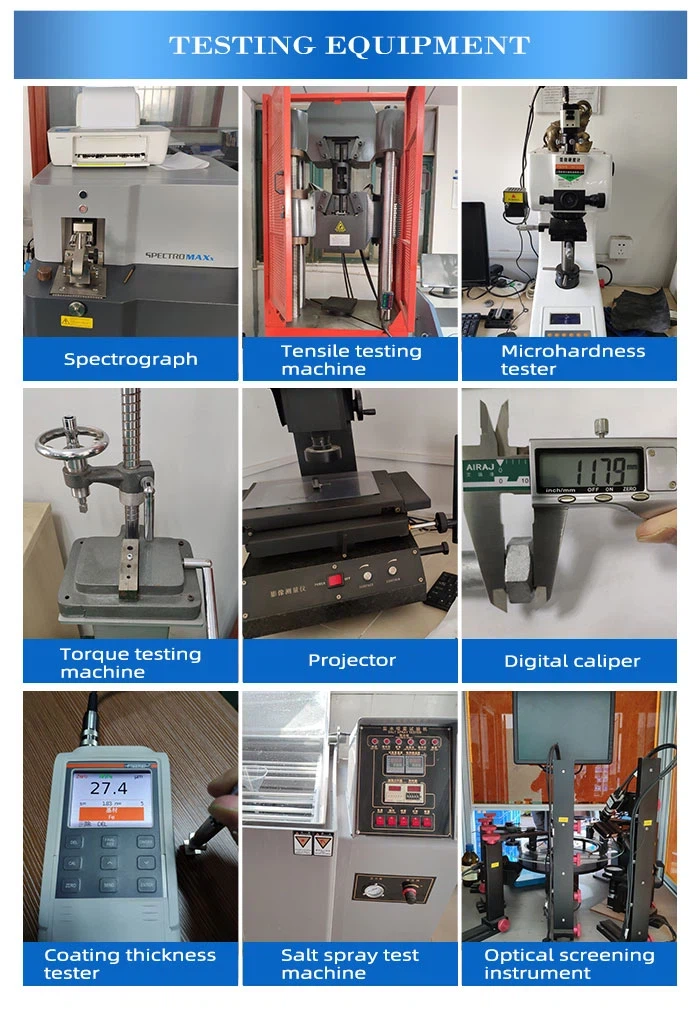
Testing Equipment
We use the following equipment to test our products to ensure they meet high quality standards:
Factory Photos
The picture below is our production workshop:

FAQ
Q: What is the difference between spring washers and flat washers?
Q: What can I use instead of spring washers?
Q: Are spring washers important?
Q: Are the spring washers in the front or the back?
Q: What is the stiffness of a spring washer?
Q: Why use spring split washers?
Q: Where do the spring washers go?
Q: Do spring washers go under nut or bolt?
Q: What are spring washers made of?
Q: Can I use 2 spring washers?
Q: What is a spring washer also known as?
Q: What grades are spring washers available?
Q: What is the difference between spring washers and conical washers?
Q: How to install spring washers correctly?
Q: How is the torque of the spring washer affected?
Q: In what areas are spring washers common?
Q: How to tell if a spring washer has failed?
Q: What is the purpose of spring washers?
Q: How to use spring washers?
●Determine the correct size and type of spring washer for your application. Spring washers come in a range of sizes, materials, and types. Selecting the right type of washer depends on the specific application and the requirements of the joint.
●Insert the spring washer between the fastener and the material being fastened. For example, if you are using a bolt to fasten two metal plates together, you would place the spring washer between the bolt head and the first plate.
●Tighten the fastener to the recommended torque value. The spring washer will compress as the fastener is tightened, providing tension and preload in the joint.
●Inspect the joint periodically to ensure that the tension is maintained. If the joint becomes loose or the tension is lost, you may need to replace the spring washer or adjust the torque on the fastener.
Q: Where to put spring washers?
As one of the most professional spring washers manufacturers and suppliers in China, we're featured by customized hardware products made in China. Please rest assured to buy or wholesale high quality spring washers for sale here from our factory. For price consultation, contact us.
Popular Products


