If you've ever stared at a bin of loose fasteners in your garage, workshop, or job site, wondering which one you actually need for that build-you're not alone. I've been in the screws and bolts game for over 12 years now, man, and I still see folks grab whatever's closest just to get the job done quick. Turns out, picking the right one isn't just about not wasting parts-it's about making sure whatever you build doesn't fail, rust, or take a turn for the worse six months down the line. Last year, we had a guy come to us panicking because his backyard fence posts were snapping after a big storm. Turns out he used regular wood screws instead of carriage bolts-total rookie move. So today, I'm breaking down how to actually pick the right screw or bolt for your specific project, no fancy engineering degree required.
First off, let's get the basics straight: screws and bolts aren't interchangeable, and neither is every single variant of them. Start by asking two big questions first-are you connecting two parts that need to stay tight (like a fence rail to a post) or are you securing something without letting it move (like a hinge on a gate)? Wait, no, actually-scrap that, make it simpler: step one is figure out what the fastener is going through and what it's going into. That's the non-negotiable first move. If you're going through a thin metal bracket and into a 2x4, that's way different than going through two 4x4s for a deck frame. Don't skip this part-we had a contractor once use a sheet metal screw for a trailer hitch; needless to say, that didn't end well.
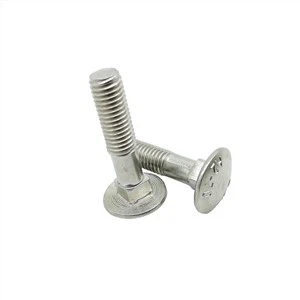
Next up, material grade is huge, and it's way more important than most people think. I see this all the time-someone grabs a cheap black oxide bolt for a outdoor project, and within a year, it's rusted solid so bad they can't turn it. Let's run through the common options. There's low carbon steel, which is cheap, great for indoor stuff like securing shelf brackets to a wall stud, but don't use it outdoors-it'll rust faster than a bike left in the rain. Then there's stainless steel, which is your go-to for moisture-prone areas: decks, fences, boat parts, anything that's outside or near water. We carry a ton of stainless steel options here, like the Stainless Steel Square Neck Carriage Bolts-those are perfect for decks because the square neck locks into the wood so they don't spin when you're tightening the nut on the other side. No more holding the bolt with one wrench while you turn the nut with the other, trust me.
If you're working on something that needs a bit more strength than regular stainless can give, go for zinc plated or galvanized steel. Galvanized is hot-dipped, so it's super durable for outdoor projects that get heavy use, like fence posts or deck supports. Zinc plated is a good middle ground-cheaper than hot-dipped, works for indoor stuff or projects that get light outdoor exposure, like a garden shed. We also have DIN603 Zinc Plated Class8.8 M6M8M10M12 Carriage Bolts-these are the standard for a lot of construction jobs, class 8.8 means they're strong enough for structural stuff like attaching a trailer tongue or a porch beam to the house.
Wait, what about set screws? Those are the ones people use to lock a pulley to a shaft, right? You know, the little ones with the flat tip that digs into the metal to keep something from sliding. For set screws, you need to match the tip to the surface you're locking to. If it's smooth metal, a flat point works best-no digging too deep, just enough grip. We've got Slotted Hex Socket Set Screw With Flat Point that's perfect for that kind of job, easy to tighten with a wrench or a hex key, whatever you have on hand.
Now, head type and drive-this is where most folks waste time picking the wrong one and end up stripping a screw head before they even finish the job. Let's break down the most common ones so you don't make that mistake. First, carriage bolts, which we mentioned earlier, have that round mushroom head with a square neck. They're great for wood because the square neck bites into the wood so it doesn't spin when tightening the nut. We carry both standard Mushroom Head Square Neck Carriage Bolts and stainless steel ones, depending on your project. Mushroom head is nice because it sits a bit flatter than some other heads, so it doesn't catch on clothes or tools.
Then there's wafer head screws-those are the ones with a wide, flat head that spreads the load over a bigger area, so they don't pull through thin material. We sell a ton of these for roofing, siding, and metal framing because the wide head keeps the screw from sinking too far into thin metal. Our Wafer Head Drilling Screw is awesome because it's self-drilling-you don't need to pre-drill a hole first, which saves so much time on a big job. Just line it up, turn the drill, and it bores through metal or wood on its own. I used to spend hours pre-drilling for metal roofing back when I was a contractor, now I just grab those and go-game changer.
Drive type is just as important as head type. Let's see: Phillips heads are common, but they strip super easy if you use a cheap screwdriver or apply too much torque. Torx heads (the star-shaped ones) are way better-they grip the screwdriver way tighter, so less stripping, more torque, perfect for big construction jobs or dense material. Hex heads are great for bolts because you can use a wrench or a socket, so you get way more tightness than a screwdriver can give. Avoid flat head screws if you can for hard jobs-they just don't have the grip of Phillips or Torx.
Size and length-this is probably the most critical step, and it's where I see the most mistakes. For bolts, you need to make sure the length is right: it should go through the first part, have enough thread to go through the second part, and leave at least 1-2 threads sticking out past the nut so you can tighten it properly. If it's too short, you won't get enough grip; if it's too long, it'll stick out and scratch something, or hit something important on the other side. For screws, it's similar: the general rule of thumb for wood-to-wood is that the screw should go through the top piece and into the bottom piece at least 1.5 times the thickness of the bottom piece. So if you're attaching a 2x4 (which is actually 1.5 inches thick) to another 2x4, you want a screw that's at least 2.25 inches long. That's enough to hold it tight without pulling through.
Wait, what about specialty projects? Let's say you're working on a boat, or a wooden bridge, or something that's going to be under a lot of stress. For saltwater or extremely humid areas, you need marine-grade stainless steel-this is way more corrosion-resistant than regular stainless, so it won't pit or rust even after years in the ocean. For structural projects, like a deck that's going to have a lot of people walking on it, don't skimp on grade. Class 8.8 bolts are the minimum for structural jobs in most building codes, so make sure you're using those, not the cheap class 4.8 ones that bend under pressure.
Another thing to consider: load. If your project is going to hold heavy stuff-like a shelf that has a 100-pound appliance on it, or a fence that's going to hold a gate with a dog on it-you need a fastener with a higher load capacity. Carriage bolts are way stronger than regular wood screws for heavy load connections because the bolt has a shank that goes all the way through, distributing the weight evenly. I had a customer last month build a custom workbench for his garage, and he tried using wood screws to attach the legs to the top. Within a week, the screws pulled out because the weight of his heavy tools was too much. He came back and got our stainless steel carriage bolts, and now that workbench is holding 500 pounds no problem.
Oh, and don't forget about environmental factors. If you're in a super cold area where it snows a lot, or a super hot area where the sun is brutal, make sure your fastener can handle that temperature range. Plastic coated or waxed fasteners work for some environments, but for extreme temps, stick to the materials we talked about earlier-stainless or galvanized. Also, if your project is near chemicals (like a garage with gasoline, or a farm with fertilizers), you need a fastener that's resistant to those chemicals too. Stainless steel is usually a safe bet here, but sometimes you need a specific alloy, so if you're not sure, just ask us-we've been in this long enough to know what works.
Wait, let's recap this to make sure it's not all jumbled. Step 1: Figure out what the fastener is going through and what it's going into, so you know if you need a bolt, screw, or set screw. Step 2: Pick the right material-stainless for moisture, galvanized/zinc for outdoor strength, low carbon for indoor light jobs. Step 3: Match the head type to your project-carriage for wood, wafer for metal/siding, mushroom for a neat finish. Step 4: Get the size right-length matters, follow the 1.5x rule for wood, enough thread past the nut for bolts. Step 5: Check the load and environment-heavy projects need higher grade, extreme conditions need corrosion-resistant materials.
And for the love of all things fasteners, don't buy bulk random fasteners from a gas station or a discount store for big jobs. Those cheap ones might look the same, but they're made with thin metal that bends or breaks easily, and their plating chips off in a year. We've had so many customers come to us after buying cheap fasteners that failed on a job-don't be that guy. Invest a little extra in good fasteners, and you won't have to redo your project a year later because a screw rusted or a bolt broke.


If you're still stuck on what to pick for your specific project-whether it's a small bookshelf, a backyard fence, a trailer, or something way bigger-don't hesitate to reach out. We've got a team of folks here who know fasteners inside and out, we can help you pick the exact screw or bolt you need, no matter how big or small your job is. Just let us know what you're working on, what materials you're using, where it's going to be, and we'll point you in the right direction.