As a screws and bolts supplier who's spent years helping builders, manufacturers, and DIYers avoid small-but-critical failures, I've seen first-hand how a faulty fastener can turn a well-planned project into a headache. A wobbly shelf, a loose machine part, or even a damaged car component often traces back to a screw or bolt that didn't meet specs, wasn't installed right, or just plain wore out. The good news? Most faulty fasteners show clear signs long before they cause major issues. Let's break down what to look for, and how our products (like the Wafer Head Drilling Screw and Pan Head Self Drilling Screws) are built to avoid these common problems.
First, let's talk about physical damage to the fastener itself-this is the most obvious sign, but it's often missed when someone is rushing through a project. Take a bolt, for example: if you pick up a bolt and notice rust that's not just surface spotting, that's a red flag. Rust eats away at the metal's core, weakening its tensile strength and making it prone to snapping under pressure. I once had a customer bring in a batch of used carriage bolts for inspection; their zinc coating had flaked off, leaving the steel exposed to moisture, and the threads were pitted so badly they couldn't grip into the wood. For context, our DIN603 Zinc Plated Class8.8 M6M8M10M12 Carriage Bolts are coated with a thick zinc layer that resists corrosion, so you won't run into that issue if you source from our stock.
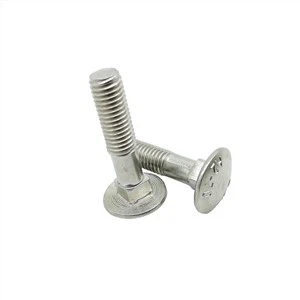
Other physical defects are even harder to spot but just as dangerous. Threads that are stripped or deformed-you'll notice this if a wrench or screwdriver slips while tightening, or if the fastener turns easily without gripping into the material. Sometimes, the head of the screw or bolt will be rounded: this happens if the tool used to drive it is the wrong size, or if the fastener was made with an under-sized drive recess. For set screws, like our Slotted Hex Socket Set Screw With Flat Point, a rounded socket means you can't apply enough torque to hold a component firmly in place, leading to movement that damages connected parts. Stainless steel fasteners, while more corrosion-resistant, aren't immune to manufacturing defects-poorly formed square necks on carriage bolts (a key feature for keeping them from spinning during installation) are a common issue with cheap knockoff products, but our Stainless Steel Square Neck Carriage Bolts are precision-machined to maintain that neck shape, so installation stays smooth and secure.
Next, look at the connection between the fastener and the materials it's holding. This is where many people first notice a problem: a screw that works loose on its own, even if it was tightened properly. Why does this happen? It could be the wrong screw length-too short, and it doesn't have enough threads to grip into the material; too long, and it pokes through, or damages the opposite side. Or it could be that the screw is the wrong type for the material. For example, drilling a regular screw into thick metal without pre-drilling a pilot hole will cause the threads to strip, as the metal can't provide enough tension. Our self-drilling screws, like the ones linked earlier, have a drill point that eliminates the need for pre-drilling in many cases, but even these won't hold if they're not matched to the material-using a wood self-drilling screw on metal is a quick way to get a loose, faulty connection.
I also see a lot of issues with over-tightening, which is a common mistake but a big cause of faulty fasteners. When you crank down on a screw or bolt beyond the manufacturer's recommended torque, the threads can snap, the head can break off, or the material being fastened (like wood or plastic) can split. Last year, a cabinet maker brought in a batch of our wafer head drilling screws and told us they'd had no issues-turns out, he was using a drill with a fixed torque setting that was too high, and he'd broken three screws before adjusting. That's why we always include torque guidelines with every product we send out; it's a small step that prevents so much frustration. Over-tightening isn't just a problem for new installs, either-old fasteners that are re-used often have stretched threads from years of pressure, so they're more prone to breaking when you try to adjust them.
Corrosion, which I touched on earlier, is a silent cause of faulty fasteners, especially in outdoor or high-moisture applications. Even stainless steel can corrode if it's the wrong grade for the environment-for example, 304 stainless steel will hold up fine in light rain, but 316 stainless steel is needed for coastal areas where salt air is present. When a fastener corrodes, it expands as rust forms, which can cause the material around it to crack, and the metal of the fastener itself becomes brittle, making it easy to snap. I once worked with a marina that had used cheap zinc-plated bolts for their dock railings; within a year, the bolts had rusted through in saltwater, leading to wobbly railings that posed a safety risk. Switching to our DIN603 zinc plated class 8.8 bolts (which have a thicker zinc coating for better salt resistance) fixed the issue for them.
Another sign of a faulty screw or bolt is when the connection shows visible stress. For example, a hinge on a door that's starting to pull away from the frame, with small cracks around the screw holes-this means the screws aren't holding, and over time, the cracks will get bigger until the hinge fails. In metal applications, like a machine part, you might see signs of bending or deformation on the bolt shank. This is usually a sign that the bolt was under-sized for the load it was carrying, or it was tightened to too high a torque. For example, if you use a 6mm bolt for a load that should require an 8mm, the shank will bend under pressure, leading to a loose connection that can damage the machine.
Let's also talk about installation mistakes that can make a good fastener seem faulty. Even with a perfect screw or bolt, using the wrong tool is a recipe for disaster. For example, using a flathead screwdriver on a Phillips recessed screw will round out the recess, making it impossible to tighten or remove the screw without damaging it. Using the wrong size wrench on a hex bolt can strip the hex head, leading to the same problem. That's why we always recommend checking the drive type and size of your fastener before starting a project-we even sell matching screwdrivers and wrenches as part of our product line, so you can get everything you need in one order.
So, how do you avoid these issues in the first place? The first step is to source your fasteners from a reputable supplier, like us. Cheap fasteners often cut corners on material quality, thread precision, and coating thickness, leading to many of the signs I mentioned above. Our products, like the Wafer Head Drilling Screw and Pan Head Self Drilling Screws, are manufactured to strict industry standards, with consistent thread patterns, durable coatings, and precision-machined heads. Our DIN603 Zinc Plated Class8.8 M6M8M10M12 Carriage Bolts and Stainless Steel Square Neck Carriage Bolts are designed for heavy-duty applications, with square necks that prevent spinning during installation, so you get a secure, tight connection every time.
If you're already dealing with a faulty screw or bolt, what should you do? First, remove the old fastener carefully-using the right tool to avoid damaging the surrounding material. Once removed, inspect it closely for the signs I mentioned: rust, stripped threads, rounded head, bent shank. If it's a manufacturing defect, reach out to your supplier for a replacement. If it's due to installation mistakes (wrong size, wrong tool), take note for your next project. For critical applications, like structural beams or machine parts, it's a good idea to use a torque wrench to ensure you're tightening the fastener to the correct specification-this prevents both under-tightening (which causes looseness) and over-tightening (which causes breakage).
I've been in this industry for over a decade, and the one thing I've learned is that fasteners are not one-size-fits-all. A screw that works for a wood shelf won't work for a metal machine part, and a bolt that's fine for indoor use will corrode in saltwater. That's why we take the time to help our customers pick the right fastener for their specific project-whether you're a large manufacturer needing bulk carriage bolts or a DIYer working on a small deck, we've got products that are built to last.
If you're working on a project and have questions about whether your screws or bolts are the right fit, or if you need to replace faulty fasteners, don't hesitate to reach out to our team. We're here to help you avoid the headaches that come with bad fasteners, and to make sure your projects are secure and long-lasting.