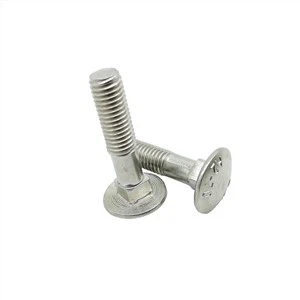
Screws and bolts are among the most fundamental yet indispensable components in various industries, from construction and manufacturing to automotive and aerospace. Their evolution over time is a fascinating journey that reflects technological advancements, changing industrial needs, and the pursuit of greater efficiency and reliability. As a leading supplier of screws and bolts, I have witnessed firsthand the remarkable transformation of these fasteners, and I am excited to share this journey with you.
Early Beginnings
The concept of using threaded fasteners dates back to ancient times. The earliest known screws were likely developed in ancient Greece around the 4th century BC. These early screws were used primarily for lifting water, as part of devices like the Archimedes' screw. The design was simple, consisting of a helical surface wrapped around a cylinder, which allowed for the movement of water when the screw was rotated.
In the Middle Ages, screws started to be used for more practical applications, such as in presses for wine and olive oil production. These screws were typically made of wood and were manually turned to apply pressure. However, the manufacturing process was crude, and the threads were often irregular, which limited their effectiveness and reliability.
The Industrial Revolution and the Rise of Mass Production
The Industrial Revolution in the 18th and 19th centuries brought about a significant change in the production of screws and bolts. With the invention of machine tools, such as the screw-cutting lathe, it became possible to produce screws and bolts with greater precision and consistency. This led to the standardization of screw sizes and threads, which made it easier to interchange parts and assemble products.
One of the key figures in the development of standardized screw threads was Joseph Whitworth. In 1841, he proposed a system of standard screw threads, known as the Whitworth thread, which became widely adopted in the United Kingdom and many other countries. The Whitworth thread had a 55-degree angle and a uniform pitch, which made it more reliable and easier to manufacture than previous thread designs.
The introduction of mass production techniques also made screws and bolts more affordable and accessible. This led to their widespread use in a variety of industries, including construction, machinery, and transportation. As the demand for screws and bolts increased, manufacturers began to develop new materials and manufacturing processes to meet the changing needs of the market.
Advancements in Materials and Manufacturing
Over the past century, there have been significant advancements in the materials and manufacturing processes used to produce screws and bolts. One of the most important developments has been the use of alloy steels, which offer superior strength, corrosion resistance, and durability compared to traditional carbon steels. Alloy steels are often used in applications where high strength and reliability are required, such as in automotive engines, aerospace components, and industrial machinery.
Another important advancement has been the development of new coating technologies, such as zinc plating and galvanizing. These coatings provide a protective layer that helps to prevent corrosion and extend the lifespan of screws and bolts. In addition, new manufacturing processes, such as cold forming and hot forging, have made it possible to produce screws and bolts with complex shapes and geometries, which has expanded their applications in various industries.
Modern Innovations
In recent years, there have been several modern innovations in the field of screws and bolts. One of the most significant developments has been the use of smart fasteners, which are equipped with sensors and other electronic components. These smart fasteners can monitor the condition of the fastener, such as its torque, tension, and temperature, and provide real-time data to the user. This technology has the potential to improve the safety and reliability of various applications, such as in the automotive and aerospace industries.
Another innovation is the development of self-drilling and self-tapping screws, which eliminate the need for pre-drilling holes. These screws are designed to drill their own holes and tap the threads as they are driven into the material, which saves time and labor. Self-drilling and self-tapping screws are commonly used in construction, woodworking, and metalworking applications.
Our Product Offerings
As a leading supplier of screws and bolts, we offer a wide range of products to meet the needs of our customers. Our product portfolio includes Alloy Steel Cup Point Set Screws, which are designed for applications where high strength and precision are required. These screws are made of high-quality alloy steel and feature a cup point design, which provides a secure and reliable connection.
We also offer Wafer Head Drilling Screw, which are ideal for applications where a low-profile fastener is needed. These screws have a wafer-shaped head and are designed to drill their own holes, which makes them easy to install.
In addition, we offer DIN603 Zinc Plated Class8.8 M6M8M10M12 Carriage Bolts, which are commonly used in construction and automotive applications. These bolts are made of high-strength steel and are zinc plated to provide corrosion resistance.
Contact Us for Your Screw and Bolt Needs
If you are in need of high-quality screws and bolts for your next project, we invite you to contact us. Our team of experts is dedicated to providing you with the best products and services to meet your needs. We offer competitive pricing, fast delivery, and excellent customer support. Whether you are a small business or a large corporation, we have the products and expertise to help you succeed.