Hey there! As a supplier of screws and bolts, I've seen my fair share of damaged hardware over the years. It's super important to be able to spot the signs of a damaged screw or bolt, whether you're a DIY enthusiast, a professional contractor, or just someone who uses these little guys around the house. In this blog, I'm gonna walk you through the key signs that your screws and bolts might be in trouble.

Physical Deformation
One of the most obvious signs of a damaged screw or bolt is physical deformation. This can come in many forms. For instance, a bent screw or bolt is a dead giveaway. You might notice that the shaft of the screw is no longer straight, or the bolt has a kink in it. This kind of damage can happen during installation if too much force is applied at an angle, or if the screw or bolt gets knocked around during handling or shipping.
Another type of physical deformation is a stripped head. You know when you try to turn a screw with a screwdriver, and it just spins without engaging? That's a stripped head. It usually happens when the wrong size or type of screwdriver is used, or when too much torque is applied. A stripped head can make it impossible to install or remove the screw, which is a real pain in the butt.
Cracks are also a big problem. You might not always be able to see them with the naked eye, but if you notice any small fractures on the surface of the screw or bolt, it's a sign that it's weakened. Cracks can develop over time due to repeated stress, corrosion, or improper heat treatment during manufacturing. A cracked screw or bolt is much more likely to break under load, which can be dangerous in certain applications.
Corrosion
Corrosion is another major culprit when it comes to damaged screws and bolts. Rust is the most common form of corrosion that we see. If you notice any reddish-brown flakes or discoloration on the surface of a screw or bolt, it's a sign that rust has set in. Rust weakens the metal, making it more prone to breakage. It can also cause the screw or bolt to seize up, making it difficult to remove.
Other types of corrosion include galvanic corrosion and pitting corrosion. Galvanic corrosion occurs when two different metals are in contact with each other in the presence of an electrolyte, like water. This can cause one of the metals to corrode at an accelerated rate. Pitting corrosion, on the other hand, creates small holes or pits in the surface of the metal. These pits can weaken the screw or bolt and make it more likely to fail.
Loose or Wobbly Fit
A loose or wobbly fit is a telltale sign that something's not right with your screw or bolt. If a screw or bolt doesn't tighten properly or keeps coming loose, it could be due to a few different reasons. One possibility is that the hole it's being installed in is too big or too small. If the hole is too big, the screw or bolt won't have enough grip to hold things together. If it's too small, you might damage the screw or bolt during installation.
Another reason for a loose fit could be that the threads on the screw or bolt are damaged. Threads can get worn down over time, or they can be damaged during installation or removal. If the threads are damaged, the screw or bolt won't be able to form a proper connection with the mating part, which can lead to a loose fit.
Excessive Wear
Excessive wear is another sign of a damaged screw or bolt. This can happen in high-friction applications, where the screw or bolt is constantly rubbing against another surface. For example, in a machine where a screw is used to hold a moving part in place, the constant movement can cause the screw to wear down. You might notice that the screw has become thinner or that the threads have become less defined.
Wear can also occur due to improper lubrication. If a screw or bolt isn't lubricated properly, it can cause increased friction, which can lead to wear and tear over time. In some cases, excessive wear can cause the screw or bolt to break completely.
How Our Products Can Help
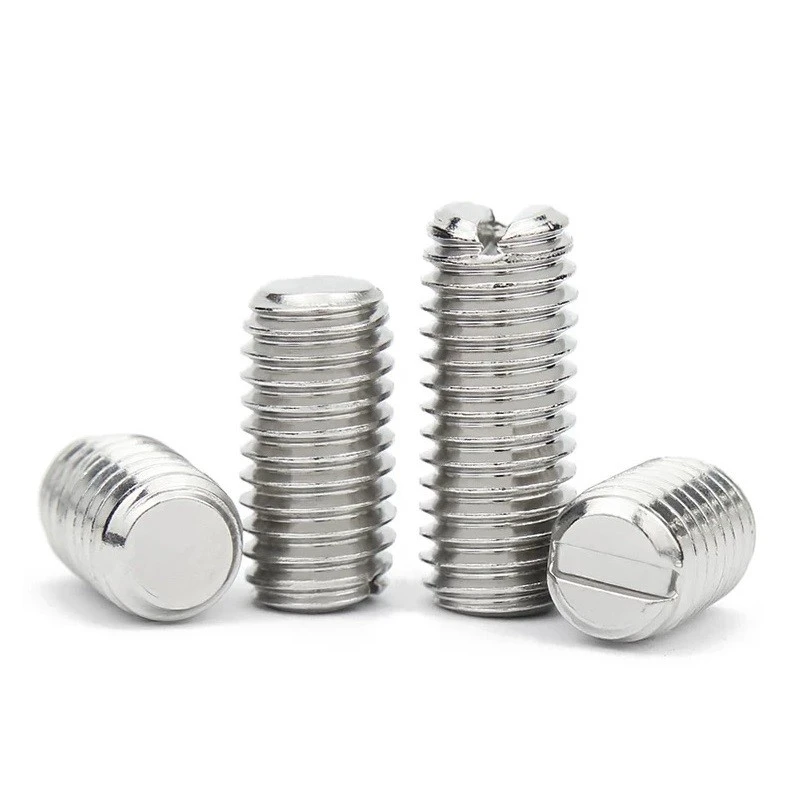
At our company, we take quality seriously. We offer a wide range of high-quality screws and bolts, like the Slotted Hex Socket Set Screw With Flat Point and Mushroom Head Square Neck Carriage Bolts. Our products are made from high-grade materials and undergo strict quality control measures to ensure that they're durable and reliable.
We also offer DIN603 Zinc Plated Class8.8 M6M8M10M12 Carriage Bolts, which are coated with zinc to provide excellent corrosion resistance. This helps to prevent rust and other forms of corrosion, ensuring that your screws and bolts last longer.
Contact Us for Your Screw and Bolt Needs
If you're in the market for high-quality screws and bolts, or if you have any questions about the signs of damaged hardware, don't hesitate to reach out. We're here to help you find the right products for your needs and ensure that you get the best value for your money. Whether you're working on a small DIY project or a large industrial application, we've got you covered.
References
- "Mechanical Fasteners Handbook" by Carl H. Hamann
- "Fastener Technology for Product Design" by Jack Bolz and Ron Parr
- Various industry standards and guidelines for screw and bolt manufacturing and testing