Hey there! As a supplier of screws and bolts, I often get asked if these little fasteners have specific installation directions. Well, the short answer is yes, they do! And in this blog post, I'm gonna break it all down for you.
Let's start with screws. Screws are designed to be threaded into a material, and different types of screws are meant for different applications. For example, Pan Head Self Drilling Screws are super handy. These bad boys have a self - drilling tip, which means you don't have to pre - drill a hole in many cases. When installing them, you want to make sure you're using the right tool. A power drill is usually the go - to, and you should set it to the appropriate speed. Too fast, and you might strip the screw or the material; too slow, and it'll take forever to drive the screw in.


But how do you know which way to turn the screw? It's pretty basic: clockwise to tighten and counter - clockwise to loosen. Sounds simple, right? Well, it is, but you'd be surprised how many people mess this up. When you're driving a self - drilling screw, start by positioning it at the right spot on the material. Apply a bit of pressure, and then start the drill. As the screw begins to drill into the material, keep the drill straight. If it goes at an angle, the screw might not hold properly, and it could even break.
Now, let's talk about Wafer Head Drilling Screw. These screws have a low - profile head, which makes them great for applications where you don't want the screw to stick out too much. Similar to other self - drilling screws, the installation process starts with a good starting position. Make sure the wafer - shaped head sits flush against the surface of the material as you're driving it in. If the head doesn't sit right, it could affect the overall look and function of the project.
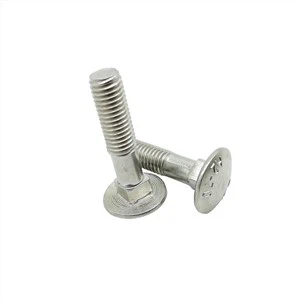
Bolts are a bit different. They're used in conjunction with nuts. There are so many types of bolts out there, like Mushroom Head Square Neck Carriage Bolts and Stainless Steel Square Neck Carriage Bolts. Carriage bolts have a unique design with a square neck under the head. When you're installing a carriage bolt, the square neck is there for a reason. It's meant to prevent the bolt from turning when you're tightening the nut on the other end.
First, you need to drill a hole that's the right size for the bolt. If the hole is too small, the bolt won't fit; if it's too big, the bolt won't hold securely. Once the hole is drilled, insert the bolt through it. Make sure the square neck sits snugly in the material. Then, take your nut and start threading it onto the bolt. You can use your fingers to get it started, but for a tight fit, you'll need a wrench. Just like with screws, turn the nut clockwise to tighten it.
Another type of bolt is the Slotted Hex Socket Set Screw With Flat Point. These are used in applications where you need to hold two parts together without protruding through the surface. When installing this type of set screw, you'll need a hex key or a slotted screwdriver, depending on the type of socket. Insert the tool into the socket and turn clockwise to tighten the screw against the part you're securing.
The material of the screw or bolt also plays a big role in the installation process. For example, if you're using a stainless - steel bolt in a high - moisture environment, it's a great choice because it won't rust easily. But stainless steel can be a bit harder to work with compared to regular steel. You might need to use a bit more force when tightening the nut, and you have to be careful not to over - tighten, which could cause the bolt to break.
In addition to the direction of turning, the depth of installation is also crucial. For screws, you don't want to drive them in too far, as it could cause the material to crack or split. On the other hand, if you don't drive them in deep enough, they won't hold properly. With bolts, the length of the bolt should be appropriate for the thickness of the materials you're joining. If the bolt is too short, the nut won't have enough threads to grip; if it's too long, it'll stick out and could be a safety hazard.
Torque is another important factor. Torque is the amount of force you apply to tighten a screw or bolt. Different applications require different levels of torque. For example, in a mechanical application where there's a lot of vibration, you'll need to apply more torque to make sure the fastener stays in place. You can use a torque wrench to measure and apply the right amount of torque.
So, as you can see, screws and bolts definitely have specific installation directions. Whether it's the type of screw or bolt, the tool you use, the direction of turning, the depth of installation, or the amount of torque, every little detail matters.
If you're in the market for high - quality screws and bolts, we've got you covered. We offer a wide range of products, from the ones we've talked about in this post to many others. Whether you're a DIY enthusiast working on a home project or a professional contractor, our screws and bolts are up to the task. If you have any questions about which product is right for your project or need more detailed installation advice, don't hesitate to reach out. We're here to help you make the right choice and ensure your project goes smoothly.