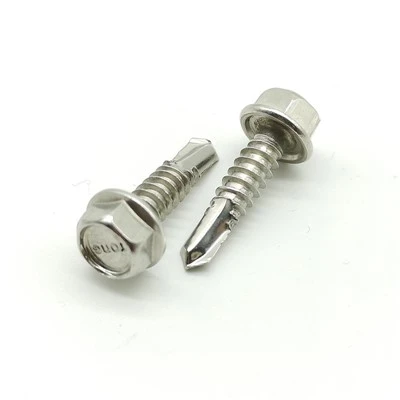
I. Visual Inspection
A qualified self-tapping screw should have the following surface characteristics:
Smooth and even surface, free from obvious scratches, burrs, cracks, bubbles, or rust;
Clear and complete threads, free from rolling damage, misalignment, or deformation;
The head groove (e.g., Phillips head, slotted head) should be symmetrical and precise, with no risk of breakage.
✅ Recommendation: Use a magnifying glass or microscope for visual inspection, especially for sampling inspections during bulk purchases.
II. Dimensional Deviation Inspection
According to national standards (e.g., GB/T 845-2017), key dimensions include:
Nominal diameter (e.g., M4, M5)
Length (from head to bottom)
Thread height and pitch
Head diameter and thickness
Measure using tools such as vernier calipers, micrometers, and thread gauges. Deviations must be within the standard's allowable range.
III. Material and Composition Analysis
The material conformity to the nominal specifications is verified using a spectrometer or metallographic analysis:
Carbon steel self-tapping screws should meet the mechanical property requirements of GB/T 3098.5;
Stainless steel screws must be confirmed as being made of 304 or 316 stainless steel to prevent the use of inferior materials;
A material report can be requested from the supplier as a quality certificate.
IV. Mechanical Property Testing
This is the core step in determining quality and mainly includes:
Failure Torque Test: Measure the maximum torque value of the screw before it fails.
Standard Basis: GB/T 3098.9 or ISO 3506 Acceptance Criterion: The failure mode should be shank twisting (indicating sufficient thread strength), not "stripping" or "head breakage."
Tensile Strength and Yield Strength: Tensile tests are performed using a universal testing machine to ensure that the mechanical properties meet the corresponding grade (e.g., grade 8.8, 10.9).
Hardness Testing
Surface hardness (HRC/HV) reflects wear resistance; Core hardness determines toughness, preventing brittle fracture; Hydrogen embrittlement risk control: After galvanizing, a dehydrogenation treatment is required, followed by a 48-hour hydrogen embrittlement test.
V. Surface Treatment and Corrosion Resistance
Coating Thickness Inspection: Measure the zinc coating thickness using a thickness gauge. A minimum of 6μm is recommended to ensure corrosion resistance.
Salt Spray Test
Simulate a humid environment. Screws should show no red rust after ≥200 hours of neutral salt spray testing. High-end products can withstand over 500 hours, suitable for coastal or outdoor projects.
Environmental Requirements: Prioritize products using trivalent chromium environmentally friendly galvanizing to avoid hexavalent chromium pollution and comply with RoHS and other environmental standards.
VI. Recommended Testing Procedure (Applicable to Procurement Acceptance)
Sampling: Randomly select ≥5 pieces from the same batch;
Initial Inspection: Appearance + Dimensional Inspection;
Physicochemical Testing: Material Analysis + Hardness Testing;
Performance Testing: Breaking Torque + Tensile Strength;
Environmental Testing: Salt Spray Test (Optional);
Report Issuance: A complete test report is provided by a third-party testing organization as the basis for quality assessment.