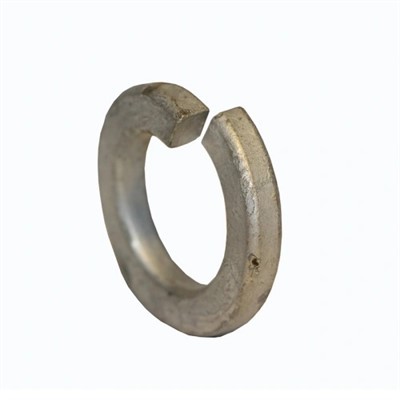
In the world of fasteners and hardware, washers play a crucial role in ensuring the stability and integrity of various connections. Among the diverse types of washers available, spherical washers and flat washers stand out as two distinct options, each with its own unique characteristics and applications. As a leading washer supplier, we are often asked about the differences between these two types of washers. In this blog post, we will delve into the details of spherical washers and flat washers, exploring their features, functions, and applications to help you make an informed decision when choosing the right washer for your project.
What is a Flat Washer?
A flat washer is a simple yet essential component in many mechanical and structural applications. It is a thin, flat, circular disk with a hole in the center, typically made of metal such as steel, stainless steel, or brass. Flat washers are used to distribute the load of a fastener, such as a bolt or a nut, over a larger area, preventing damage to the surface of the material being fastened. They also help to prevent the fastener from loosening due to vibration or movement.
One of the key advantages of flat washers is their versatility. They can be used in a wide range of applications, from automotive and machinery to construction and electronics. Flat washers are available in various sizes, thicknesses, and materials to suit different requirements. They are also relatively inexpensive and easy to install, making them a popular choice for many industries.
What is a Spherical Washer?
A spherical washer, on the other hand, is a specialized type of washer that has a spherical or curved surface on one or both sides. This curved surface allows the washer to adjust to misaligned or uneven surfaces, providing a more secure and stable connection. Spherical washers are typically used in applications where there is a need to compensate for angular misalignment or to distribute the load evenly over a curved surface.
Spherical washers are commonly used in heavy machinery, automotive suspension systems, and other applications where there is a high degree of movement or vibration. They are also used in applications where a precise and stable connection is required, such as in aerospace and military equipment. Spherical washers are available in various sizes and materials, including steel, stainless steel, and bronze.
Key Differences between Spherical Washers and Flat Washers
1. Shape and Design
The most obvious difference between spherical washers and flat washers is their shape. Flat washers are flat and circular, while spherical washers have a curved or spherical surface. This difference in shape gives each type of washer its unique properties and applications.
2. Function and Application
Flat washers are primarily used to distribute the load of a fastener over a larger area, preventing damage to the surface of the material being fastened. They are also used to prevent the fastener from loosening due to vibration or movement. Spherical washers, on the other hand, are used to compensate for angular misalignment or to distribute the load evenly over a curved surface. They are commonly used in applications where there is a high degree of movement or vibration.
3. Load Distribution
Flat washers distribute the load of a fastener evenly over a flat surface, while spherical washers distribute the load evenly over a curved surface. This difference in load distribution makes spherical washers more suitable for applications where there is a need to compensate for angular misalignment or to distribute the load evenly over a curved surface.
4. Material and Durability
Both flat washers and spherical washers are available in a variety of materials, including steel, stainless steel, and bronze. However, the choice of material depends on the specific application and the environmental conditions. Spherical washers are often made of materials that are more resistant to wear and corrosion, as they are typically used in applications where there is a high degree of movement or vibration.
Applications of Spherical Washers and Flat Washers
Applications of Flat Washers
- Automotive Industry: Flat washers are commonly used in automotive applications, such as engine components, suspension systems, and brake systems. They help to distribute the load of the fasteners and prevent damage to the surfaces of the components.
- Construction Industry: Flat washers are used in construction applications, such as building frames, bridges, and pipelines. They help to distribute the load of the fasteners and prevent damage to the surfaces of the materials being fastened.
- Electronics Industry: Flat washers are used in electronics applications, such as printed circuit boards and electrical enclosures. They help to distribute the load of the fasteners and prevent damage to the delicate components.
Applications of Spherical Washers
- Heavy Machinery: Spherical washers are commonly used in heavy machinery applications, such as cranes, excavators, and bulldozers. They help to compensate for angular misalignment and distribute the load evenly over a curved surface.
- Automotive Suspension Systems: Spherical washers are used in automotive suspension systems to compensate for angular misalignment and provide a more stable and comfortable ride.
- Aerospace and Military Equipment: Spherical washers are used in aerospace and military equipment to provide a precise and stable connection in applications where there is a high degree of movement or vibration.
Choosing the Right Washer for Your Application
When choosing between a spherical washer and a flat washer, it is important to consider the specific requirements of your application. Here are some factors to consider:


- Load Requirements: If you need to distribute the load of a fastener evenly over a flat surface, a flat washer is the best choice. If you need to compensate for angular misalignment or distribute the load evenly over a curved surface, a spherical washer is the better option.
- Environmental Conditions: If your application is exposed to harsh environmental conditions, such as high temperatures, corrosion, or vibration, you may need to choose a washer made of a more durable material, such as stainless steel or bronze.
- Cost: Flat washers are generally less expensive than spherical washers, so if cost is a major factor, a flat washer may be the better choice.
Conclusion
In conclusion, spherical washers and flat washers are two distinct types of washers, each with its own unique characteristics and applications. Flat washers are simple, versatile, and inexpensive, making them a popular choice for many applications. Spherical washers, on the other hand, are specialized washers that are used to compensate for angular misalignment and distribute the load evenly over a curved surface. When choosing between a spherical washer and a flat washer, it is important to consider the specific requirements of your application, including load requirements, environmental conditions, and cost.
As a leading washer supplier, we offer a wide range of spherical washers and flat washers to meet the needs of our customers. Whether you need a standard washer or a custom-made washer, we have the expertise and resources to provide you with the right solution. If you have any questions or need assistance in choosing the right washer for your application, please contact us. We look forward to working with you.