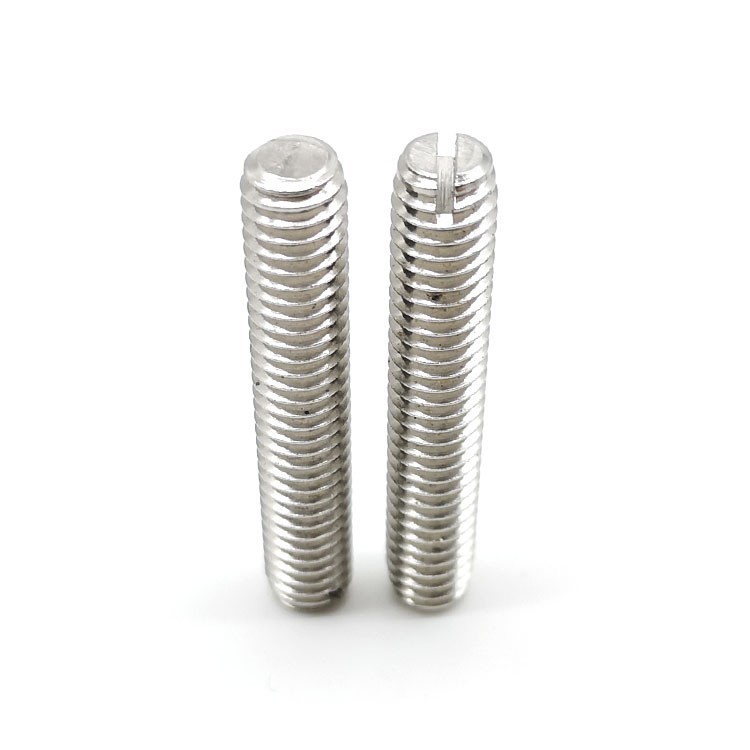
1. Passivation treatment
Passivation treatment is to form a protective film on the surface of the bolt through chemical reaction to improve its corrosion resistance. The surface of the bolt after passivation treatment usually has good corrosion resistance and is suitable for occasions with high surface requirements such as electronic products.
2. Oxidation treatment (blackening)
Oxidation treatment (blackening) is a low-cost surface treatment method that forms an oxide film on the surface of the bolt through chemical reaction. Although this treatment method is low-cost, its corrosion resistance is relatively poor, and it is usually necessary to apply oil to improve its rust resistance.
3. Electroplating
Electroplating is to plate a layer of metal on the surface of the bolt through electrolysis to improve its corrosion resistance and aesthetics. Common electroplating materials include zinc, nickel, chromium, etc. Electroplating zinc is the most commonly used electroplating method, which has the characteristics of low cost and good appearance, but its corrosion resistance is average.
4. Phosphating treatment
Phosphating treatment is a process of forming a phosphating film on the surface of the bolt, which is usually used to improve the corrosion resistance and lubricity of the bolt. Bolts after phosphating treatment usually need to be oiled to further improve their rust resistance.
5. Electrophoresis treatment
Electrophoresis treatment is to use electrophoresis technology to evenly cover the particles of paint, latex or rubber on the surface of the bolt to form a uniform and smooth protective layer. This treatment method can significantly improve the corrosion resistance and appearance quality of the bolt.
6. Spray painting
Spray painting is to spray a thin layer of color on the surface of the bolt through a spray gun, mainly used to beautify the appearance of the bolt. This method is often used in the electronics industry to meet appearance requirements.
7. Hot-dip galvanizing
Hot-dip galvanizing is a process in which the bolt is immersed in molten zinc liquid to form a layer of zinc coating on its surface. This treatment method has good corrosion resistance, but the processing may cause certain impact on the environment.
8. Dacromet treatment
Dacromet treatment is a new type of anti-corrosion coating process that forms a zinc-chromium coating by coating a solution containing zinc powder, aluminum powder and chromic acid, and then baking at high temperature. This treatment method has good corrosion resistance and environmental protection performance.
9. Nickel plating
Nickel plating is a process of plating a layer of nickel on the surface of the bolt by electrolysis or chemical methods. Nickel-plated bolts have good corrosion resistance and conductivity, and are suitable for occasions where corrosion protection and conductivity are required.
10. Sherardizing treatment
Sherardizing treatment is a process of forming a layer of zinc coating by diffusing zinc powder onto the surface of the bolt at high temperature. This treatment method has good corrosion resistance and uniformity, and is suitable for high-strength bolts.