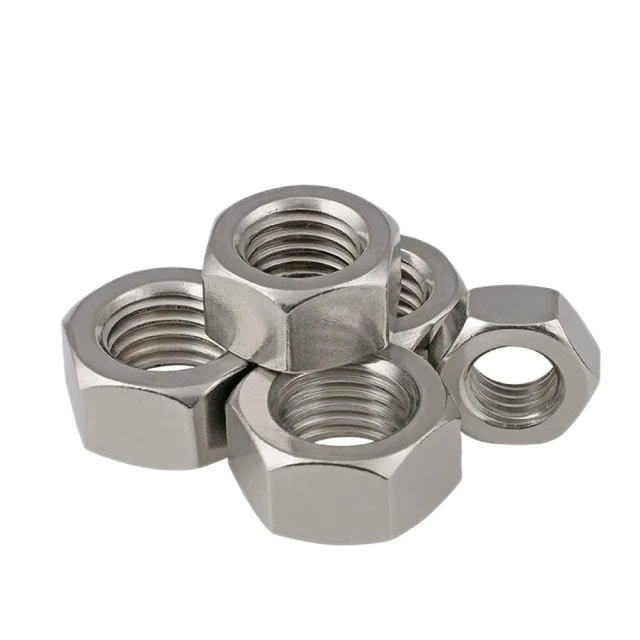
I. Friction-based locking: This method increases friction by increasing the positive pressure between the threads, preventing relative rotation.
Spring washers: These use elasticity to generate additional pressure, increasing friction. They are low-cost but have limited locking ability.
Self-locking nuts: These nuts have an internal nylon ring or a constricting structure. When tightened, they deform, generating friction and providing reliable locking.
Double nuts: Two nuts are tightened against each other, creating pressure between the contact surfaces and increasing friction.
II. Mechanical locking: This method directly restricts nut rotation using locking elements, providing reliable locking.
Cotter pins and slotted nuts: After tightening the nut, a cotter pin is inserted and the tail is pried open. This is the most reliable method for locking.
Locking washers: The inner wing of the washer engages with the screw groove, and the outer wing fits tightly against the side of the nut. This provides reliable locking.
Twin wire connections: A steel wire is threaded through the holes in the heads of multiple bolts, connecting them in series to restrain each other. This method is suitable for grouped threaded connections.
III. Permanent Anti-Loosening Methods
Permanent anti-loosening is achieved by disrupting the rotational flexibility of the threaded joint. Disassembly typically damages the parts.
Spot Welding Anti-Loosening: Spot welding the exposed parts of the nut and bolt together.
Punching Anti-Loosening: Punching a point at the engagement point of the bolt and nut with a punch to disrupt the threads.
Adhesive Anti-Loosening: Applying an anaerobic adhesive or similar bonding agent to the threaded engagement area, allowing it to cure and bond together.
IV. Other Anti-Loosening Methods
Nut Anti-Loosening Liquid: Applying nut anti-loosening liquid to the bolt's tightening area before tightening the nut achieves the desired anti-loosening effect.
Double Nut (Left and Right Turn) Anti-Loosening: Using a left-handed nut and a right-handed nut together for tightening and anti-loosening.
Screw and Nut Drilling and Pin Fixing: In machinery, pins are mainly used for assembly positioning, but can also be used for connection, loosening, and overload shearing connections in safety devices.