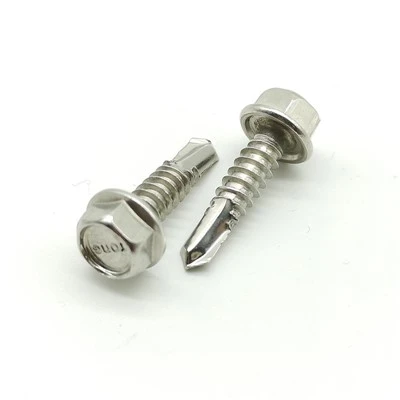
1. Appearance Details Inspection: The screwdriver head should have sharp, consistent grooves and minimal wobble after insertion. There should be no burrs on the edges to prevent stripping and damage during tightening.
The threads should be full and uniform, with no collapsed or missing teeth at the crest and no cracks at the tip. Otherwise, the threads are prone to breakage and stripping during use.
The surface coating should be uniform in color, free of rust spots and peeling, with consistent overall gloss and no processing defects such as pinholes.
2. Simple Performance Verification: Lightly file the screw surface with a regular file. High-quality products will meet the hardness standard; the file will slip and be difficult to use. A surface hardness of ≥450HV0.3, meeting national standards, is acceptable.
A simple test screw into a test plate of the corresponding material should yield a smooth, matching internal thread without significant deformation or damage to the screw itself.
3. Compliance and Detail Verification: Measure the outer diameter. Qualified products will have dimensions within national standard tolerances. Inferior screws will have a significantly thinner outer diameter, resulting in insufficient tightening force.
Legitimate product packaging clearly indicates complete specifications and batch number, includes a certificate of conformity, supports quality traceability, and avoids counterfeit or substandard products.
4. Core Performance Standards Reference: High-quality self-tapping screws must meet the requirements of national standard GB/T 3098.5, with carburized layer depth and core hardness within the specified range. Rust resistance can be verified through salt spray testing, and outdoor products can provide rust protection for over 48 hours.