If you've ever taken apart a bicycle pedal, a kitchen appliance, or even the engine of a small lawnmower, you might have noticed a tiny, flat (or sometimes coiled) ring sitting between a bolt head and the surface it's tightening against. These are washers, and for a component so small it's easy to overlook, they perform some of the most critical work in mechanical systems. As a washer supplier, I've spent years talking to engineers, repair technicians, and assembly line workers who all share one common realization: washers aren't just afterthoughts. They're the unsung heroes that keep machines from failing, wear out prematurely, or come loose when you need them most. Let's break down why washers matter, how they work, and the different types that solve specific problems for every kind of mechanical system.
First, let's get one thing straight: washers do not serve a single job. Their design is tailored to solve specific mechanical pain points, and misusing or skipping them is one of the most common (and costly) mistakes in assembly and maintenance. The most basic function of a plain washer, for example, is to distribute the load of a fastener. When you tighten a bolt down on bare metal, the pressure from the bolt head or nut concentrates on a tiny spot-enough to scratch the surface, deform thin metal sheets, or even strip the threads in soft materials like aluminum or plastic. A washer spreads that clamping force across a wider area, protecting the material and ensuring the fastener stays seated evenly. For context, think of trying to push a pushpin through cardboard: if you press with your finger, your skin takes all the pressure and it hurts, but the pushpin (your bolt) would tear through the cardboard. A washer is like putting a coin under the pushpin, turning the pressure into a gentle, even force that works for both materials.
That's why the Carbon Steel Plain Washer is such a staple in nearly every industry-from automotive assembly to construction to consumer electronics. Carbon steel is durable, cost-effective, and resists deformation far better than softer metals, making it ideal for routine load distribution. But plain washers aren't one-size-fits-all. In high-vibration environments, like heavy machinery, truck engines, or industrial conveyor belts, a plain washer won't be enough to stop fasteners from working loose over time. That's where spring washers come in, designed specifically to maintain tension even when parts shift or vibrate.
Spring washers work on a simple principle: when compressed between a fastener and the surface, they exert constant, consistent pressure on the joint. This prevents the gap that forms when vibration loosens a bolt or nut. Not all spring washers are the same, though, and choosing the wrong type can lead to the same problems you were trying to solve. For lighter, lower-vibration applications like small motor mounts or household appliances, a Single Coil Spring Washer is often the best choice. Its coiled design creates a steady spring force without taking up too much space, making it perfect for tight assemblies where weight or size is a concern.
For higher-stakes environments, like heavy construction equipment or offshore wind turbines, Double Coil Spring Washers or Hot Dip Galvanized Spring Washers are engineered to deliver stronger, more reliable tension. Double coil washers have two stacked coils, which means they can handle more compression and maintain their tension longer than single coil models, even under heavy cyclic loading. The Hot Dip Galvanized coating is a game-changer here, especially for outdoor or corrosive environments. When a metal is hot-dip galvanized, it's coated in a layer of zinc that acts as a barrier against rust and corrosion-critical for parts exposed to rain, saltwater, or industrial chemicals. I've had customers tell me that switching to hot dip galvanized spring washers cut their annual maintenance costs by 30% on equipment operating near coastal highways, because corrosion was no longer eating through washers and causing fasteners to fail prematurely.


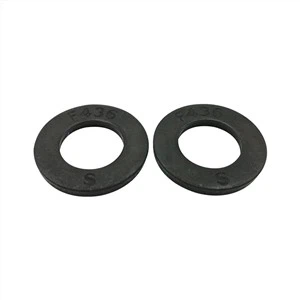
Speaking of high-stakes, let's talk about heavy-duty mechanical systems, like bridge construction, crane arms, or heavy agricultural equipment. These applications need washers that can handle extreme loads, high pressure, and repeated stress-enter the Heavy Washer. Unlike plain or spring washers, heavy washers are thicker, made from higher-grade steel, and designed to distribute massive clamping forces without deforming or breaking. A common mistake I see here is trying to use a standard plain washer in a heavy load application; the thin metal will bend under pressure, eliminating all the benefits of load distribution and leaving the joint vulnerable to failure. For example, when bolting steel beams together on a bridge, a Heavy Wascher ensures the load of thousands of pounds of steel is spread evenly across the beam's surface, preventing the bolt from pulling through or the beam from warping over time.
What's interesting about washers is that their importance scales with the system's complexity. In a simple consumer product, like a toaster, skipping a washer might lead to a scratch on the outer shell, but it won't cause a safety hazard. In a commercial elevator, though, skipping a washer on the cabin's support bolts could lead to loose fasteners, misalignment, and a catastrophic safety incident. That's why engineers don't just pick washers at random-they specify exact types, sizes, and coatings based on the environment, load, and expected lifespan of the system.
Another often-overlooked function of washers is sealing. In systems that carry fluids, like hydraulic lines or plumbing pipes, washers can create a watertight or airtight seal between the joint. A rubber or neoprene washer, for example, is used in plumbing to prevent leaks between threaded pipes. Even in mechanical systems, a properly sized and seated washer can fill small gaps between surfaces, keeping dust, dirt, and moisture out of sensitive components. This is especially important for equipment operating in dirty or dusty environments, like farm tractors or mining machinery, where contaminants can wear down bearings, gears, or seals if they get inside.
I've worked with a lot of maintenance teams that see washers as a disposable, cheap part-and they are, in bulk, but that doesn't mean they're replaceable. I once had a customer who was troubleshooting a recurring problem with their industrial packaging line: every few weeks, a bolt on the conveyor drive would come loose, halting production for hours. They tried tightening the bolt more frequently, but that only led to stripped threads on the conveyor frame. When they replaced the generic plastic washer they were using with a Carbon Steel Plain Washer and a Single Coil Spring Washer, the problem went away. The plain washer distributed the load and stopped the bolt from digging into the soft aluminum frame, while the spring washer maintained tension even as the conveyor vibrated during operation. That small switch saved them thousands of dollars in downtime and repair costs in the first year.
The takeaway here is that washers are a critical part of mechanical system reliability, even if they're not the most visible. Their importance lies in their ability to solve specific, common problems: load distribution, vibration resistance, corrosion protection, sealing, and preventing premature wear. As a washer supplier, my job isn't just to sell parts-it's to help customers choose the right washer for their application, whether that's a Carbon Steel Plain Washer for a small electronic assembly, a Hot Dip Galvanized Spring Washer for an outdoor construction project, or a Heavy Washer for a large-scale industrial machine.
If you're working on a project and aren't sure which washer is right for your system, or if you're dealing with recurring fastener or joint issues that you think might be related to your washer choice, don't hesitate to reach out. Understanding the importance of washers starts with knowing what they can do, and matching that to your specific needs. Don't let small, overlooked parts turn into big, costly problems-let's work together to find the right washers for your mechanical systems, and keep everything running smoothly.