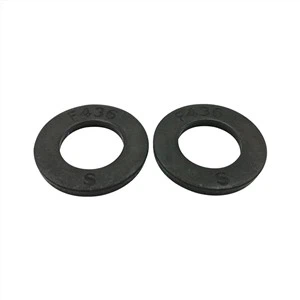
Hey there! As a washer supplier, I often get asked about the differences between plain and chamfered washers. It's a topic that might seem a bit technical at first, but once you understand the ins and outs, it'll be a breeze to choose the right one for your needs. So, let's dive in!
What Are Plain Washers?
Plain washers are probably the most common type of washers you'll come across. They're simple, flat, and circular in shape. You can think of them as little discs that sit between a nut or bolt head and the surface of the material you're fastening. Their main job is to distribute the load of the fastener evenly over a larger area. This helps prevent damage to the surface, like cracking or indentation, and also keeps the fastener from loosening over time.
We offer a wide range of plain washers, including Carbon Steel Plain Washer. Carbon steel plain washers are known for their durability and strength. They're great for general-purpose applications, whether you're working on a small DIY project at home or a large industrial construction site.
What Are Chamfered Washers?
Now, let's talk about chamfered washers. These washers have a beveled or angled edge, usually on one or both sides. The chamfer, or bevel, is the sloped part that makes the edge of the washer less sharp. This design has several advantages.
First of all, chamfered washers are easier to install. The beveled edge helps guide the washer onto the bolt or stud, especially in tight spaces or when the fastener is at an angle. This can save you a lot of time and frustration during the installation process.
Secondly, chamfered washers can reduce stress concentrations. When a plain washer is tightened, the sharp edges can create high stress points on the surface of the material. Chamfered washers, on the other hand, distribute the load more evenly around the beveled edge, which helps prevent damage to the material and extends the lifespan of the fastener.
Key Differences
1. Appearance
The most obvious difference between plain and chamfered washers is their appearance. Plain washers have a flat, smooth surface all around, while chamfered washers have a distinct beveled edge. This difference in appearance might not seem like a big deal, but it can have a significant impact on the performance and functionality of the washer.
2. Installation
As I mentioned earlier, chamfered washers are generally easier to install. The beveled edge acts as a guide, making it easier to align the washer with the bolt or stud. This is especially useful in applications where precision is key, such as in automotive or aerospace industries.
Plain washers, on the other hand, require a bit more care during installation. You need to make sure they're properly aligned and centered on the fastener to ensure even load distribution. If a plain washer is installed incorrectly, it can lead to uneven stress distribution and potentially cause problems down the line.
3. Load Distribution
Both plain and chamfered washers are designed to distribute the load of the fastener, but they do it in slightly different ways. Plain washers distribute the load evenly over a flat surface, which is great for applications where the surface is flat and smooth.
Chamfered washers, however, distribute the load more evenly around the beveled edge. This makes them better suited for applications where the surface is curved or irregular, or where there's a risk of stress concentrations.
4. Applications
Plain washers are commonly used in a wide variety of applications, from simple household repairs to heavy-duty industrial machinery. They're versatile and cost-effective, making them a popular choice for many DIYers and professionals alike.


Chamfered washers, on the other hand, are often used in applications where precision and performance are critical. They're commonly found in automotive engines, aerospace components, and high-tech electronics. The beveled edge helps ensure a secure and reliable connection, even under extreme conditions.
Choosing the Right Washer
So, how do you choose between plain and chamfered washers? Well, it really depends on your specific application. Here are a few things to consider:
- Surface Type: If the surface you're fastening is flat and smooth, a plain washer might be sufficient. However, if the surface is curved or irregular, a chamfered washer could be a better choice.
- Installation Requirements: If you're working in a tight space or need to install the washer quickly, a chamfered washer's beveled edge can make the job easier.
- Load and Stress: If the fastener will be subjected to high loads or stress, a chamfered washer's ability to distribute the load more evenly can help prevent damage and ensure a longer lifespan.
Our Washer Selection
At our company, we understand that choosing the right washer is crucial for the success of your project. That's why we offer a wide range of washers, including Oversized Washer and Flat Washer. Whether you need a plain washer for a simple project or a chamfered washer for a high-performance application, we've got you covered.
Our washers are made from high-quality materials and are rigorously tested to ensure they meet the highest standards of quality and performance. We also offer competitive prices and fast shipping, so you can get the washers you need when you need them.
Contact Us for Your Washer Needs
If you're still not sure which type of washer is right for your project, or if you have any other questions, don't hesitate to contact us. Our team of experts is always here to help you find the perfect washer for your needs.
Whether you're a DIY enthusiast, a professional contractor, or an industrial manufacturer, we're committed to providing you with the best washers and the best customer service. So, why wait? Get in touch with us today and let's start working on your project together!
References
- Machinery's Handbook, 31st Edition
- Fastener Technology Handbook, 3rd Edition