As a supplier of unstandard parts, I understand the critical role interchangeability plays in the functionality and efficiency of various industries. Unstandard parts, by their very nature, deviate from established norms, making ensuring their seamless interchangeability a challenging yet essential task. In this blog post, I'll share insights and strategies that have proven effective in my experience, helping you navigate the complexities of unstandard part interchangeability.
Understanding the Concept of Interchangeability
Interchangeability refers to the ability of parts to be substituted for one another without any significant modification or adjustment. In the context of unstandard parts, this means that even though these components do not adhere to standard specifications, they should still be able to perform the same function and fit into the same assembly as similar parts. This is crucial for several reasons, including reducing downtime, simplifying maintenance, and enhancing overall system performance.
The Challenges of Achieving Interchangeability with Unstandard Parts
One of the primary challenges we face as unstandard part suppliers is the lack of standardization. Unlike standard parts, which are manufactured to meet specific industry-wide specifications, unstandard parts are often designed to meet unique requirements. This means that each part may have its own set of tolerances, dimensions, and material properties, making it difficult to ensure that they can be interchanged with other parts.
Another challenge is the complexity of the manufacturing process. Unstandard parts often require specialized equipment and techniques to produce, which can increase the risk of variation and inconsistency. Additionally, the use of different materials and manufacturing processes can result in parts with different physical and mechanical properties, further complicating the interchangeability issue.
Strategies for Ensuring Interchangeability
Precise Design and Engineering
The first step in ensuring the interchangeability of unstandard parts is to have a precise design and engineering process. This involves working closely with the customer to understand their specific requirements and then using advanced CAD/CAM software to design the part to exact specifications. By using 3D modeling and simulation tools, we can identify potential issues early in the design process and make necessary adjustments to ensure that the part will fit and function correctly.
Tight Tolerance Control
Tolerance control is another critical factor in ensuring interchangeability. Tolerances refer to the allowable variation in the dimensions and properties of a part. By maintaining tight tolerances during the manufacturing process, we can ensure that each part is as close to the design specifications as possible. This requires the use of high-precision machining equipment and strict quality control measures to monitor and verify the dimensions and properties of each part.
Material Selection and Testing
The choice of materials can also have a significant impact on the interchangeability of unstandard parts. Different materials have different physical and mechanical properties, which can affect how the part fits and functions. Therefore, it is essential to select the right material for each application and to ensure that the material meets the required specifications. This may involve conducting material testing to verify the material's properties and ensure that it is suitable for the intended use.
Standardization of Manufacturing Processes
Standardizing the manufacturing processes can help to reduce variation and ensure consistency in the production of unstandard parts. This involves developing a set of standard operating procedures (SOPs) that outline the steps and parameters for each manufacturing process. By following these SOPs, we can ensure that each part is manufactured in the same way, using the same equipment and materials, which helps to minimize the risk of variation and improve the interchangeability of the parts.
Quality Control and Inspection
Quality control and inspection are essential for ensuring the interchangeability of unstandard parts. This involves conducting a series of inspections and tests throughout the manufacturing process to verify the dimensions, properties, and functionality of each part. By using advanced metrology equipment and inspection techniques, we can detect and correct any issues early in the process, ensuring that each part meets the required specifications.
Examples of Unstandard Parts and Their Interchangeability
Unthreaded Spacers
Unthreaded spacers are used to provide a precise distance between two components. Unthreaded Spacers are often custom-designed to meet specific requirements, such as the length, diameter, and material. To ensure their interchangeability, it is essential to maintain tight tolerances on the dimensions and to select the right material for the application.
Eyes Bolts FormB
Eyes Bolts FormB are used for lifting and securing heavy loads. Eyes Bolts FormB are typically custom-made to meet specific load requirements and environmental conditions. To ensure their interchangeability, it is important to design the bolts to meet the same load capacity and to use the same material and manufacturing process.
Galvanized Steel Eyebolts
Galvanized Steel Eyebolts are used in applications where corrosion resistance is required. Galvanized Steel Eyebolts are custom-made to meet specific dimensions and load requirements. To ensure their interchangeability, it is essential to maintain consistent galvanizing thickness and to verify the material properties.


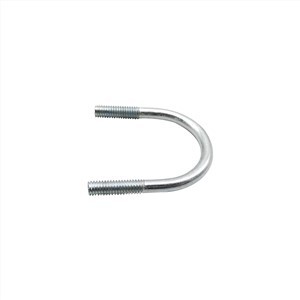
U Bolts
U Bolts are used for securing pipes, tubes, and other round objects. U Bolts are often custom-designed to fit specific applications. To ensure their interchangeability, it is important to maintain tight tolerances on the dimensions and to select the right material for the application.
Lifting Eye Bolts
Lifting Eye Bolts are used for lifting heavy objects. Lifting Eye Bolts are custom-made to meet specific load requirements and safety standards. To ensure their interchangeability, it is essential to design the bolts to meet the same load capacity and to use the same material and manufacturing process.
Conclusion
Ensuring the interchangeability of unstandard parts is a complex but essential task. By following the strategies outlined in this blog post, including precise design and engineering, tight tolerance control, material selection and testing, standardization of manufacturing processes, and quality control and inspection, we can increase the likelihood that our unstandard parts will be interchangeable and meet the needs of our customers.
If you are in need of high-quality unstandard parts with excellent interchangeability, I encourage you to reach out to us. We have the expertise and experience to provide you with customized solutions that meet your specific requirements. Contact us today to start a conversation about your project and how we can help.