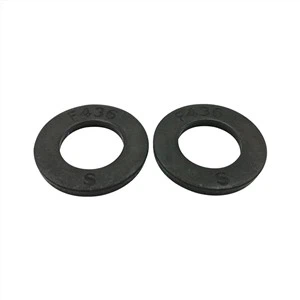
When it comes to the world of washers, precision is key. As a dedicated washer supplier, I understand the importance of accurately measuring the inner and outer diameters of washers. This process not only ensures the quality of our products but also helps our customers make informed decisions when selecting the right washers for their specific applications. In this blog post, I'll share the methods and tools I use to measure the inner and outer diameters of washers, along with some tips and best practices.
Why Accurate Measurements Matter
Before diving into the measurement techniques, let's briefly discuss why accurate measurements are so crucial. Washers come in a wide range of sizes and specifications, and even a small deviation in diameter can have a significant impact on their performance. For example, if the inner diameter of a washer is too small, it may not fit properly on the bolt or stud, leading to a loose connection. On the other hand, if the outer diameter is too large, the washer may not fit within the available space or may interfere with other components.
Accurate measurements also play a vital role in quality control. As a supplier, I need to ensure that every washer I produce meets the specified dimensions and tolerances. By measuring the inner and outer diameters, I can identify any potential issues early in the manufacturing process and take corrective actions to prevent defective products from reaching the market.
Tools for Measuring Washer Diameters
To measure the inner and outer diameters of washers accurately, I rely on a variety of tools. Here are some of the most commonly used tools in my toolkit:
Vernier Caliper
A vernier caliper is a versatile measuring tool that can be used to measure both the inner and outer diameters of washers. It consists of a main scale and a sliding vernier scale, which allows for precise measurements up to 0.02 mm or 0.001 inches. To measure the outer diameter of a washer, simply open the jaws of the caliper and place them around the outside of the washer. Make sure the jaws are perpendicular to the surface of the washer and read the measurement on the scale. To measure the inner diameter, insert the smaller jaws of the caliper into the hole of the washer and expand them until they touch the inner surface. Again, read the measurement on the scale.
Micrometer
A micrometer is another precision measuring tool that is commonly used to measure the thickness and diameter of small objects, including washers. It provides even more accurate measurements than a vernier caliper, with a resolution of up to 0.001 mm or 0.00005 inches. To measure the outer diameter of a washer using a micrometer, place the washer between the anvil and the spindle of the micrometer and rotate the thimble until the spindle touches the washer. Read the measurement on the sleeve and the thimble. To measure the inner diameter, use an inside micrometer, which has a smaller measuring range and is designed specifically for measuring the inside dimensions of holes.
Digital Caliper
A digital caliper is a modern alternative to the traditional vernier caliper. It uses electronic sensors to measure the distance between the jaws and displays the measurement on a digital screen. Digital calipers are easy to use and provide accurate measurements up to 0.01 mm or 0.0005 inches. They also have additional features such as the ability to switch between metric and imperial units and to zero the display at any point.
Measuring the Outer Diameter of a Washer
Now that we have the necessary tools, let's walk through the process of measuring the outer diameter of a washer.
- Select the appropriate tool: Depending on the size and precision requirements of the washer, choose either a vernier caliper, a micrometer, or a digital caliper.
- Clean the washer: Before taking any measurements, make sure the washer is clean and free of dirt, debris, or any other contaminants. This will ensure accurate measurements and prevent damage to the measuring tools.
- Position the washer: Place the washer on a flat and stable surface, such as a workbench or a measuring block. Make sure the washer is centered and aligned properly.
- Take the measurement: Using the selected tool, carefully measure the outer diameter of the washer at several points around the circumference. This will help to ensure that the washer is round and that the measurement is accurate. Record the measurements and calculate the average diameter.
Measuring the Inner Diameter of a Washer
Measuring the inner diameter of a washer is a bit more challenging than measuring the outer diameter, as it requires the use of a smaller measuring tool and more precise positioning. Here's how I do it:
- Select the appropriate tool: For measuring the inner diameter of a washer, I usually use a vernier caliper or a digital caliper with a small jaw opening. If the washer has a very small inner diameter, I may use an inside micrometer.
- Clean the washer: As with measuring the outer diameter, make sure the washer is clean and free of any contaminants before taking the measurement.
- Insert the measuring tool: Carefully insert the measuring tool into the hole of the washer, making sure it is centered and aligned properly. If using a caliper, expand the jaws until they touch the inner surface of the washer. If using an inside micrometer, adjust the measuring range and insert the anvil and spindle into the hole.
- Take the measurement: Once the measuring tool is in place, take the measurement at several points around the circumference of the hole. This will help to ensure that the hole is round and that the measurement is accurate. Record the measurements and calculate the average diameter.
Tips and Best Practices
Here are some tips and best practices to keep in mind when measuring the inner and outer diameters of washers:
- Use the right tool for the job: Make sure you select the appropriate measuring tool based on the size and precision requirements of the washer. Using the wrong tool can lead to inaccurate measurements and damage to the tool.
- Take multiple measurements: To ensure accuracy, take multiple measurements at different points around the circumference of the washer or the hole. This will help to identify any variations or irregularities in the dimensions.
- Be careful when handling the measuring tools: Measuring tools are delicate and can be easily damaged if not handled properly. Make sure you hold the tool firmly and avoid applying too much pressure or force.
- Clean and maintain the measuring tools: Regularly clean and lubricate the measuring tools to keep them in good working condition. This will help to ensure accurate measurements and extend the lifespan of the tools.
- Follow the manufacturer's instructions: When using a measuring tool, make sure you follow the manufacturer's instructions carefully. This will help to ensure that you are using the tool correctly and getting accurate measurements.
Conclusion
Accurately measuring the inner and outer diameters of washers is essential for ensuring the quality and performance of these small but important components. By using the right tools and following the proper techniques, you can obtain precise measurements that will help you select the right washers for your specific applications and ensure that they fit properly and function as intended.
As a washer supplier, I am committed to providing high-quality products that meet the strictest standards of accuracy and precision. Whether you need Hardened Steel Washers, Heavy Washers, or Stainless Steel Split Lock Washers, I have the expertise and resources to meet your needs. If you have any questions or need assistance with selecting the right washers for your project, please don't hesitate to contact me. I look forward to working with you and helping you find the perfect washers for your application.


References
- "Measurement Techniques for Washers." Machinery's Handbook, 31st Edition. Industrial Press, 2016.
- "Precision Measuring Tools." ASME Y14.5-2009. American Society of Mechanical Engineers, 2009.
- "Vernier Caliper and Micrometer: How to Use Them." Engineering ToolBox. Accessed [Date].